

GENERIC NAME: CISATRACURIUM BESYLATE INJECTION USP
BRAND NAME: CISBLOK
COMPOSITION:
CISBLOK (10mg/5ml)
Each ml contains
Cisatracurium Besylate USP
Eq. to Cisatracurium ……………….………2mg
Water for Injection IP ……………qs
CISBLOK (cisatracurium besylate) is a nondepolarizing type of skeletal muscle relaxant meant for intravenous administration. It has an intermediate onset and duration of action as compared to neuromuscular blocking agents.
Indicated as an adjunct to general anesthesia, to facilitate tracheal intubation, and to provide skeletal muscle relaxation during surgery.
CISATRACURIUM SHOULD ONLY BE ADMINISTERED INTRAVENOUSLY. IT IS NOT MEANT TO BE USED IN NEONATES.
The dosage information provided below is meant only as a guide. Doses of cisatracurium should be individualized in every patient.
A peripheral nerve stimulator, when used for such individualization, will permit the most advantageous use of cisatracurium, minimize the possibility of underdosing or overdosing, and will aid in the evaluation of recovery.
ADULTS
Initial Doses
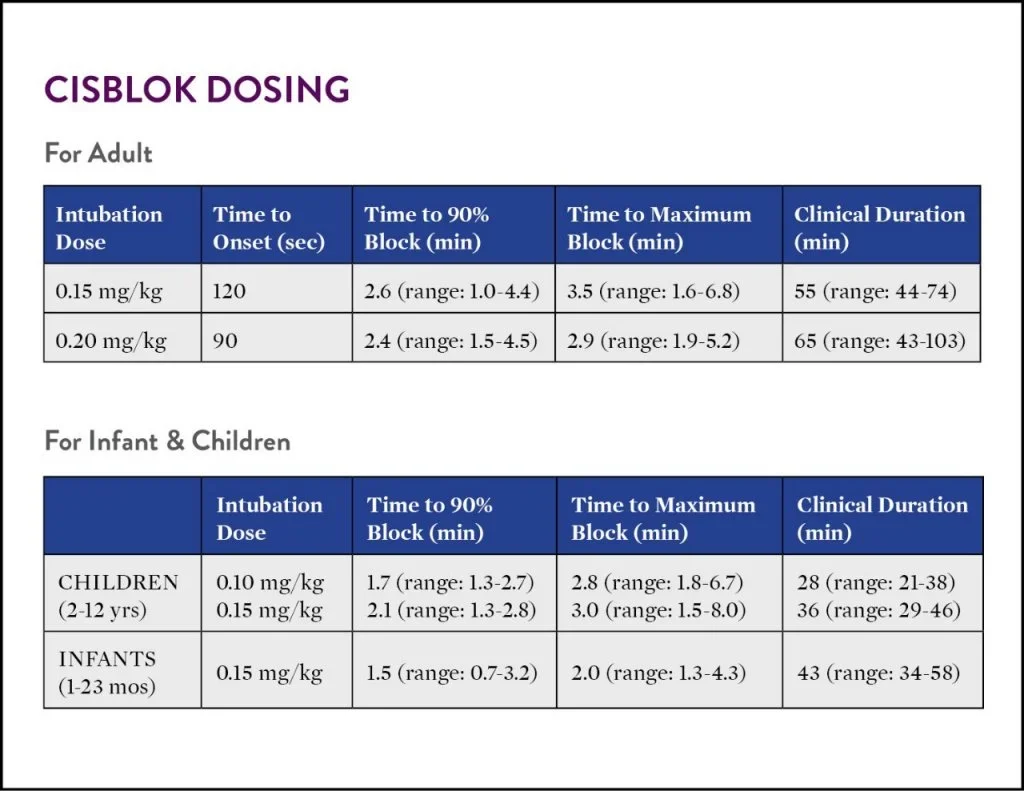
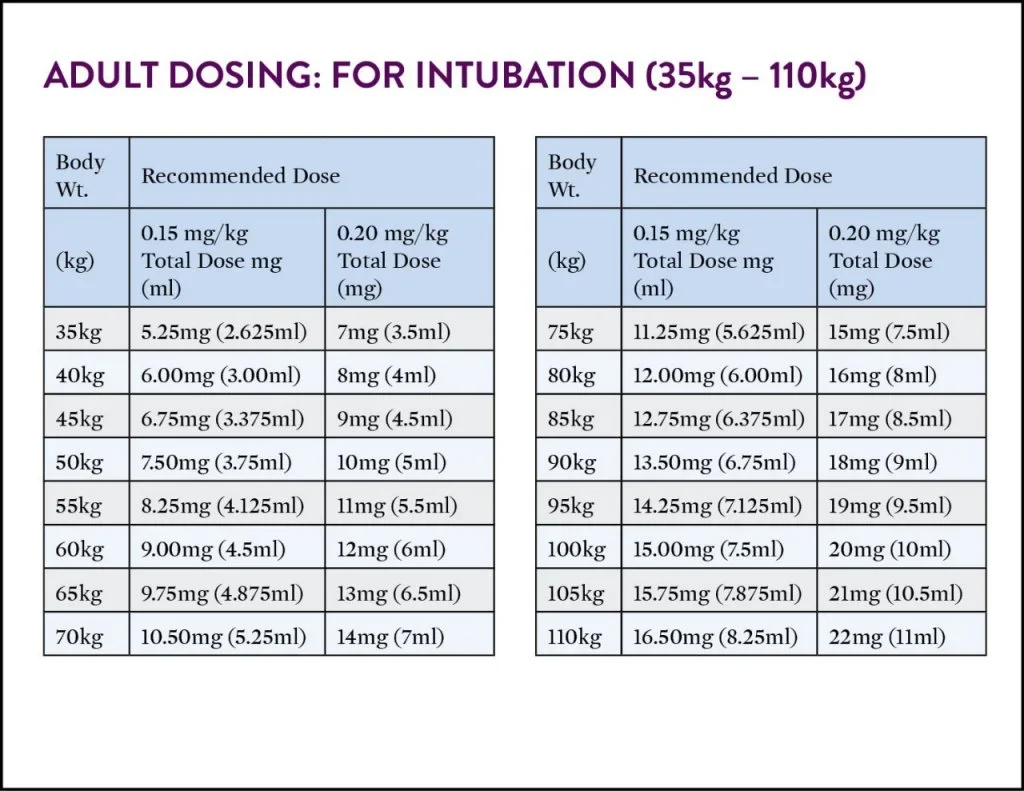
One of two intubating doses may be chosen: 0.15 (3 × ED95) and 0.20 (4 × ED95) mg/kg. (ED95 is the dose required to produce 95% suppression of the adductor pollicis muscle twitch response to ulnar nerve stimulation). Both these doses have been reported to produce GOOD or EXCELLENT conditions for intubation when used as components of a propofol/nitrous oxide/oxygen induction-intubation technique, or as components of a thiopental/nitrous oxide/oxygen induction-intubation technique. The choice of dose selection depends upon the desired time to tracheal intubation and the anticipated length of surgery. The presence of co-induction agents such as midazolam and fentanyl and also the depth of anesthesia are factors that can influence intubation conditions. Doses up to 8 × ED95 cisatracurium have been safely administered to healthy adult patients and patients with serious cardiovascular disease. These larger doses are associated with longer clinically effective durations of action.
Maintenance dose
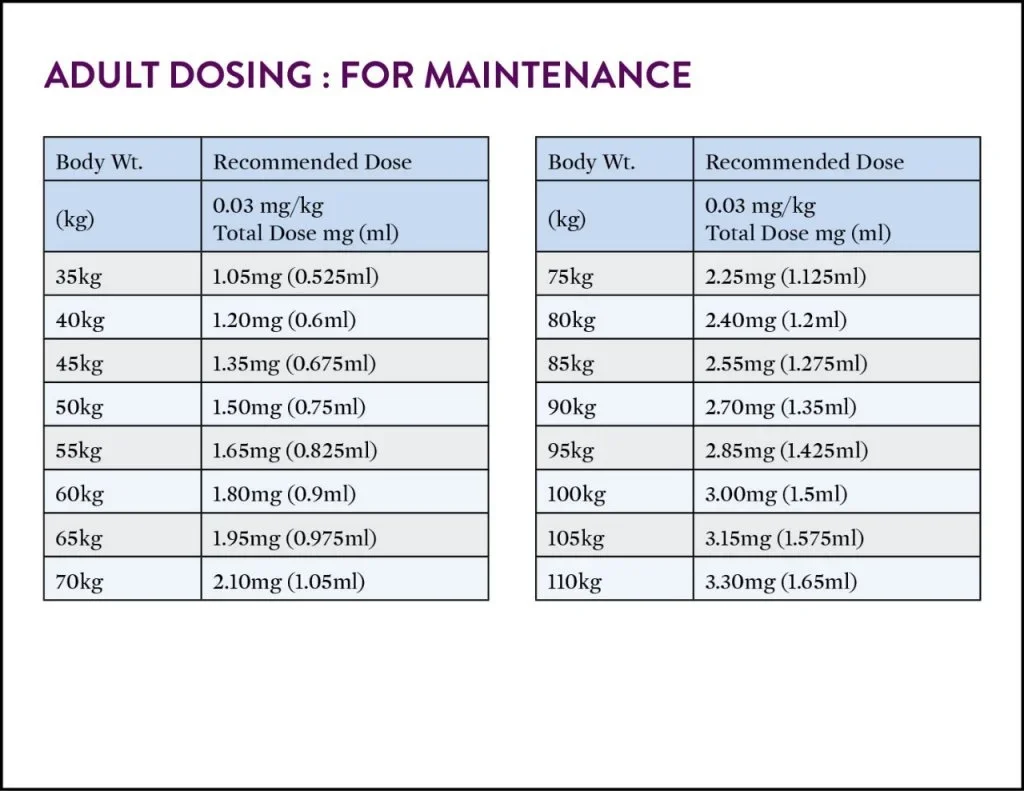
A dose of 0.03 mg/kg cisatracurium is recommended for maintenance of neuromuscular block in case of prolonged surgical procedures. This dose can sustain neuromuscular block for approximately 20 minutes and hence maintenance dosing is generally required 40 to 50 minutes following an initial dose of 0.15 mg/kg and 50 to 60 minutes following an initial dose of 0.20 mg/kg. The need for maintenance doses should be determined by clinical criteria.
Isoflurane or enflurane administered with nitrous oxide/oxygen may prolong the clinically effective duration of action of initial and maintenance doses. The magnitude of these effects may depend on the duration of administration of the volatile inhalational anesthetic agents. In surgical procedures of prolonged duration, when enflurane or isoflurane anesthesia is being used, less frequent maintenance dosing or lower maintenance doses of cisatracurium may be necessary. In case of patients receiving propofol anesthesia, no adjustments to the initial dose of cisatracurium are required.
CHILDREN
Initial Doses
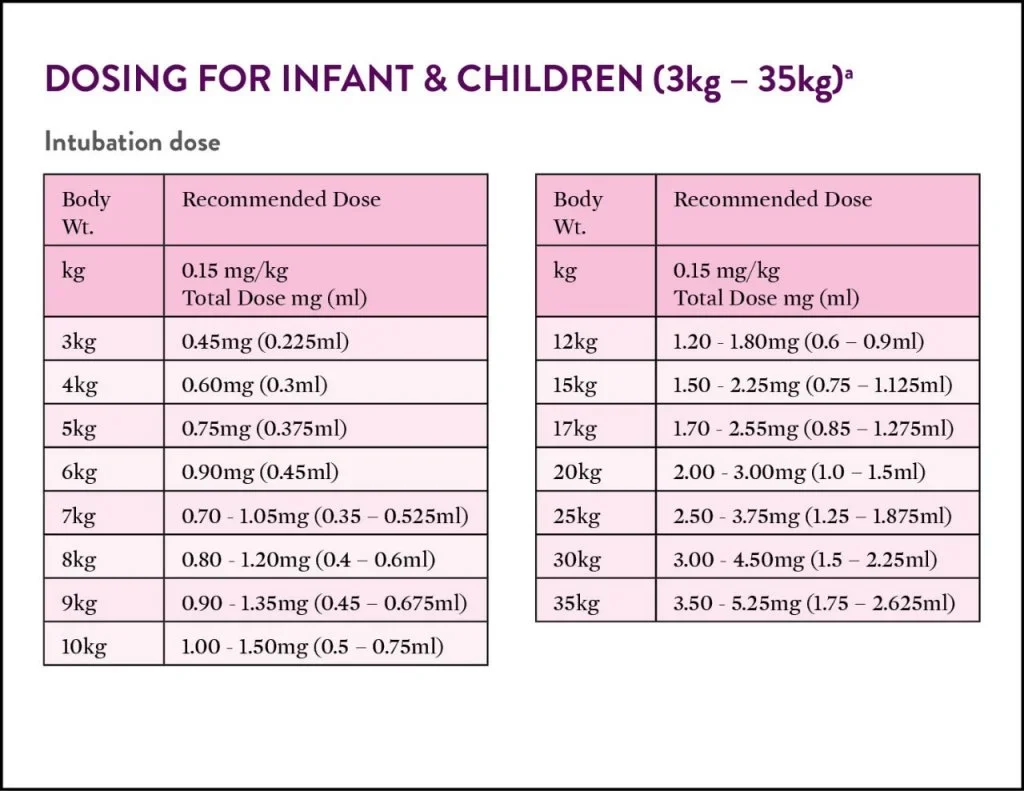
Children 2 to 12 years of age: Dose is 0.10-0.15 mg/kg administered over 5 to 10 seconds during either halothane or opioid anesthesia. 0.10 mg/kg dose has been reported to produce maximum neuromuscular block in an average of 2.8 minutes (range: 1.8 to 6.7 minutes) and clinically effective block for 28 minutes (range: 21 to 38 minutes). The dose of 0.15 mg/kg has been reported to produce maximum neuromuscular block in about 3.0 minutes (range: 1.5 to 8.0 minutes) and clinically effective block (time to 25% recovery) for 36 minutes (range: 29 to 46 minutes).
INFANTS
Initial Doses
Infants 1 month to 23 months: Dose is 0.15 mg/kg administered over 5 to 10 seconds. This dose has been reported to produce maximum neuromuscular block in about 2.0 minutes (range: 1.3 to 3.4 minutes) and clinically effective block (time to 25% recovery) for about 43 minutes (range: 34 to 58 minutes).
Cisatracurium can be administered by continuous infusion to adults and children aged 2 or more years for maintenance of neuromuscular block during extended surgical procedures. The rate of administration should be adjusted according to response obtained by peripheral nerve stimulation.
Accurate dosing can be facilitated using a precision infusion device. An initial infusion rate of 3 mcg/ kg/min may be required to rapidly counteract the spontaneous recovery of neuromuscular function. Thereafter, a rate of 1 to 2 mcg/ kg/min should be adequate to maintain continuous neuromuscular block in the range of 89% to 99% in most pediatric and adult patients.
Reduction of the infusion rate by up to 30% to 40% should be considered when cisatracurium is administered during stable isoflurane or enflurane anesthesia (administered with nitrous oxide/oxygen at the 1.25 MAC level). The rate of infusion of atracurium required in patients undergoing coronary artery bypass surgery with induced hypothermia (25° to 28°C) for maintenance of adequate surgical relaxation is reported to be approximately half the rate required during normothermia. A similar effect on the infusion rate of cisatracurium may be expected based on the structural similarities between cisatracurium and atracurium.
Tables 1 and 2 provide guidelines for delivery, in mL/hr (equivalent to microdrops/ minute when 60 microdrops = 1 mL), of Cisatracurium solutions in concentrations of 0.1 mg/mL (10 mg/100 mL) or 0.4 mg/mL (40 mg/100 mL).
Table 1
| Infusion Rates of Cisatracurium for Maintenance of Neuromuscular Block During Opioid/Nitrous Oxide/Oxygen Anesthesia for a Concentration of 0.1 mg/mL | ||||||
|---|---|---|---|---|---|---|
| Drug Delivery Rate (mcg/kg/min) | ||||||
| 1.0 | 1.5 | 2.0 | 3.0 | 5.0 | ||
| Patient Weight (kg) | Infusion Delivery Rate (mL/hr) | |||||
| 10 | 6 | 9 | 12 | 18 | 30 | |
| 45 | 27 | 41 | 54 | 81 | 135 | |
| 70 | 42 | 63 | 84 | 126 | 210 | |
| 100 | 60 | 90 | 120 | 180 | 300 | |
Table 2
| Infusion Rates of Cisatracurium for Maintenance of Neuromuscular Block During Opioid/Nitrous Oxide/Oxygen Anesthesia for a Concentration of 0.4 mg/mL | ||||||
|---|---|---|---|---|---|---|
| Drug Delivery Rate (mcg/kg/min) | ||||||
| 1.0 | 1.5 | 2.0 | 3.0 | 5.0 | ||
| Patient Weight (kg) | Infusion Delivery Rate (mL/hr) | |||||
| 10 | 1.5 | 2.3 | 3.0 | 4.5 | 7.5 | |
| 45 | 6.8 | 10.1 | 13.5 | 20.3 | 33.8 | |
| 70 | 10.5 | 15.8 | 21.0 | 31.5 | 52.5 | |
| 100 | 15.0 | 22.5 | 30.0 | 45.0 | 75.0 | |
Table 2
Y-site Administration
Cisatracurium Injection is acidic (pH = 3.25 to 3.65) and may not be compatible with alkaline solution having a pH greater than 8.5 (e.g., barbiturate solutions).
- Cisatracurium Injection is compatible with:
- 5% Dextrose Injection
- 0.
9% Sodium Chloride Injection
Cisatracurium Injection is not compatible with propofol Injection, ketorolac Injection for Y-site administration. Studies of other parenteral products have not been conducted.
Dilution Stability
Cisatracurium Injection diluted in 5% Dextrose Injection; 0.9% Sodium Chloride Injection, or 5% Dextrose and 0.9% Sodium Chloride Injection, to 0.1 mg/mL may be stored either under refrigeration or at room temperature for 24 hours without significant loss of potency.
Diluted Cisatra Injection is chemically and physically stable for at least 12 hours, when stored in either polyvinyl chloride or polypropylene containers, at concentrations between 0.1 and 2.0 mg/mL in the following infusion solutions:
- Sodium Chloride (0.9% w/v) Intravenous Infusion
- Glucose (5% w/v) Intravenous Infusion
- Sodium Chloride (0.18% w/v) and Glucose (4% w/v) Intravenous Infusion
Cisatracurium Injection should not be diluted in Lactated Ringer’s Injection due to chemical instability.
NOTE: Parenteral drug products should be inspected visually for particulate matter and discoloration prior to administration whenever solution and container permit.
CISBLOK is contraindicated in patients with a known hypersensitivity to cisatracurium besylate, atracurium or benzenesulfonic acid. The 10 mL multiple-dose vials of CISBLOK is contraindicated for use in premature infants because the formulation contains benzyl alcohol
Severe anaphylactic reactions, including life-threatening and fatal ones, have been reported with the use of cisatracurium. The necessary precautions should be taken, such as the immediate availability of appropriate emergency treatment and in those individuals who have had previous anaphylactic reactions to other neuromuscular blocking agents since cross-reactivity between neuromuscular blocking agents, both depolarizing and non-depolarizing, has been reported in this class of drugs.
Cisatracurium should be administered in carefully adjusted dosage by or under the supervision of experienced clinicians. The drug only be administered if personnel and facilities for resuscitation and life support (tracheal intubation, artificial ventilation, oxygen therapy), and an antagonist of cisatracurium are immediately available. A peripheral nerve stimulator is recommended to be used so as to measure neuromuscular function during the administration. Cisatracurium has no known effect on consciousness, pain threshold, or cerebration.
Neuromuscular block should not be induced before unconsciousness to avoid any distress to the patient.
The 10 mL multiple-dose vials of CISBLOK contain benzyl alcohol, which is toxic when administered locally to neural tissue. Exposure to excessive amounts of benzyl alcohol has been associated with toxicity (hypotension, metabolic acidosis), particularly in neonates, and an increased incidence of kernicterus, particularly in small preterm infants. Deaths, primarily in preterm infants, associated with exposure to excessive amounts of benzyl alcohol have been rarely reported.
Administration of high dosages of medications containing this preservative must take into account the total amount of benzyl alcohol administered. If the patient requires more than the recommended dosages or other medications containing this preservative, the clinician must take into account the daily metabolic load of benzyl alcohol from these combined sources.
PRECAUTIONS
Cisatracurium is not recommended for rapid sequence endotracheal intubation because of its intermediate onset of action. Recommended doses of cisatracurium have no clinically significant effects on heart rate; therefore, cisatracurium will not counteract the bradycardia produced by many anesthetic agents or by vagal stimulation. Neuromuscular blocking agents may have a profound effect in patients with neuromuscular diseases (e.g., myasthenia gravis and the myasthenic syndrome). Patients with burns have been shown to develop resistance to nondepolarizing neuromuscular blocking agents, including atracurium.
Patients with hemiparesis or paraparesis also may demonstrate resistance to nondepolarizing muscle relaxants in the affected limbs. Acid-base and/or serum electrolyte abnormalities may potentiate or antagonize the action of neuromuscular blocking agents. There is currently no reported or published data to support the use of cisatracurium by intramuscular route.
Renal and Hepatic Disease
No clinically significant alterations in the recovery profile have been reported in patients with renal dysfunction or in patients with end-stage liver disease following a 0.1 mg/kg dose of cisatracurium.
Malignant Hyperthermia (MH)
Cisatracurium besylate has not been studied in MH-susceptible patients
Pregnancy Category B
There are no adequate and well-controlled studies of cisatracurium in pregnant women. Cisatracurium should be used during pregnancy only if clearly needed.
Labor and Delivery
The use of cisatracurium during labor, vaginal delivery, or cesarean section has not been studied in humans and it is not known whether cisatracurium administered to the mother has effects on the fetus.
Nursing Mothers
It is not known whether cisatracurium besylate is excreted in human milk. Caution should be exercised following administration of cisatracurium to a nursing woman.
Pediatric Use
Cisatracurium has not been studied in pediatric patients below the age of 1 month. Premature and low-birth-weight infants, as well as patients receiving high dosages, may be more likely to develop toxicity due to benzyl alcohol present in the 10 mL vial. Practitioners administering this and other medications containing benzyl alcohol should consider the combined daily metabolic load of benzyl alcohol from all sources. It is not meant for use in neonates.
Geriatric Use
No overall differences in safety or effectiveness have been reported between geriatric and younger population. The time to maximum block after the administration of 0.1 mg/kg dose is reported to be approximately 1 minute slower in elderly patients.
Cisatracurium has been reported to be used safely following varying degrees of recovery from succinylcholine-induced neuromuscular block. Prior administration of succinylcholine has been reported to reduce the time to onset of action of cisatracurium but has no effect on the duration of neuromuscular block.
No drug interactions have been reported when vecuronium, pancuronium, or atracurium were administered following varying degrees of recovery. Isoflurane or enflurane administered with nitrous oxide/oxygen may prolong the clinically effective duration of action of initial and maintenance doses of cisatracurium. The magnitude of these effects may depend on the duration of administration of these inhalational anesthetic agents. Other drugs which may enhance the neuromuscular blocking action of nondepolarizing agents such as cisatracurium include certain antibiotics (e.g., tetracyclines, aminoglycosides, lincomycin, clindamycin, colistin, bacitracin, polymyxins, and sodium colistemethate), magnesium salts, lithium, local anesthetics, procainamide, and quinidine. Resistance to the neuromuscular blocking action of nondepolarizing neuromuscular blocking agents has been demonstrated in patients chronically administered phenytoin or carbamazepine.
The adverse reaction reported with the use of cisatracurium are as follows:
Cardiovascular: bradycardia, hypotension, flushing
Respiratory: bronchospasm
Dermatological: rash
General: Histamine release, hypersensitivity reactions including anaphylactic or anaphylactoid responses which were reported to be life threatening and fatal in some cases.
Overdosage with neuromuscular blocking agents may result in neuromuscular block which extends beyond the time needed for surgery and anesthesia. The primary treatment in such a scenario will be maintenance of a patent airway and controlled ventilation until recovery of normal neuromuscular function is assured.
Once recovery from neuromuscular block begins, further recovery may be facilitated by administration of an anticholinesterase agent (e.g., neostigmine, edrophonium) in conjunction with an appropriate anticholinergic agent. Patients administered antagonists should be evaluated for evidence of adequate clinical recovery using clinical criteria such as 5-second head lift and grip strength.
Antagonists (such as neostigmine and edrophonium) should not be administered when complete neuromuscular block is evident or suspected. In such a scenario, the use of a peripheral nerve stimulator is recommended to evaluate recovery and antagonism of neuromuscular block.
Cisatracurium plasma concentration-time data following IV bolus administration can be described by a two-compartment open model.
Distribution
The volume of distribution of cisatracurium is limited by its large molecular weight and high polarity.
The volume of distribution at steady state (Vss) is reported to be 145 mL/kg in healthy adult surgical patients receiving opioid anesthesia. The Vss is reported to be larger in similar patients receiving inhalation anesthesia.
Protein Binding
Due to its rapid degradation at physiologic pH, the binding of cisatracurium to plasma proteins has not been successfully studied.
Metabolism
The degradation of cisatracurium is largely independent of liver metabolism. Results from in vitro experiments suggest that cisatracurium undergoes Hofmann elimination to form laudanosine and the monoquaternary acrylate metabolite. The monoquaternary acrylate undergoes hydrolysis by non-specific plasma esterases to form the monoquaternary alcohol (MQA) metabolite. The MQA metabolite can also be subject to Hofmann elimination but at a much slower rate than cisatracurium. Laudanosine is metabolized to desmethyl metabolites which are conjugated with glucuronic acid and excreted in the urine.
Elimination
Organ-independent Hofmann elimination is the predominant pathway for the elimination of cisatracurium. Even though the liver and kidney play a minor role in the elimination of cisatracurium, they are the primary pathways for the elimination of metabolites. Therefore, the t½β values of metabolites (including laudanosine) are longer in patients with kidney or liver dysfunction.
Mean CL values for cisatracurium have been reported to be ranging from 4.5 to 5.7 mL/min/kg in studies of healthy surgical patients. Approximately 80% of the CL is accounted for by Hofmann elimination and the remaining 20% by renal and hepatic elimination. Mean t½β values of cisatracurium have been reported to be ranging from 22 to 29 minutes in healthy surgical patients and are consistent with the t½β of cisatracurium reported in vitro (29 minutes). The mean± SD t½β values of laudanosine have been reported to be 3.1± 0.4 and 3.3 ± 2.1 hours in healthy surgical patients receiving cisatracurium or atracurium respectively.
STORAGE CONDITIONS:
Store at 2° to 8°C to preserve potency.
Protect from light.
DO NOT FREEZE.
Upon removal from refrigeration to room temperature, use within 21 days even if rerefrigerated.


©2025 Abbott, All Rights Reserved.
Unless otherwise specified, all product and service names appearing in this Internet site are trademarks owned by or licensed to Abbott, its subsidiaries or affiliates. No use of any Abbott trademark, trade name, or trade dress in this site may be made without the prior written authorization of Abbott, except to identify the product or services of the company.