


Brand Name : Ebility® ASP
Generic Name : Aceclofenac, Paracetamol & Serratiopeptidase Tablets
Pack Size : 10 Tablets
For the use only of Registered Medical Practitioners or a Hospitals or a Laboratory
EBILITY® ASP
1. Generic Name: Aceclofenac, Paracetamol & Serratiopeptidase Tablets
2.Qualitative and Quantitative Composition:
Each film-coated tablet contains:
Paracetamol I.P………..325 mg
Aceclofenac I.P………100 mg
Serratiopeptidase I.P……15 mg
(As enteric coated granules equivalent to 30000 enzyme
activity unit of Serratiopeptidase)
Colours: Sunset Yellow FCF & Titanium Dioxide I.P.
3.Dosage Form & strength
Kindly refer section 1 and 2
4.Clinical particulars
4.1Therapeutic indication
For treatment of acute pain in adults.
4.2 Posology and method of administration
Posology
The recommended dose is 1-2 tablets in day or as directed by the Physician.
Method of Administration:
For oral administration only. Patient should be advised not to chew or crush the tablets and the tablets should be swallowed whole with a sufficient amount of liquid.
4.3 Contraindications
- It is contraindicated in patients with known Hypersensitivity to Aceclofenac, Paracetamol, or any of the excipients.
- Patients with a history of or active, recurrent peptic ulcer/hemorrhage (two or more distinct episodes of proven ulceration or bleeding).
- Patients who have previously shown hypersensitivity reactions (e.g. asthma, rhinitis, angio-oedema or urticarial) in response to ibuprofen, aspirin or other NSAIDs.
- Patients with a history of anaphylactic reactions.
- Patients with severe heart failure, hypertension, and hepatic or renal impairment should not be prescribed.
- During pregnancy, especially during the last trimester of pregnancy , in women attempting to conceive and lactation unless there are compelling reasons for doing so. The lowest effective dosage should be used
- Patients with active bleeding or bleeding diathesis.
- Established congestive heart failure (NYHA II-IV), ischemic heart disease, peripheral arterial disease and/or cerebrovascular disease.
- History of gastrointestinal bleeding or perforation, related to previous NSAIDs therapy.
4.4 pecial warnings and precautions for use
Aceclofenac
General
- Undesirable effects may be minimized by using the lowest effective dose for the shortest duration necessary to control symptoms. Concomitant use with NSAIDs, including COX-2 selective inhibitors, should be avoided.
- It should not be combined with other analgesic medications that contain paracetamol and should be given with care to patients with impaired kidney or liver function.
- The administration of an NSAID may cause a dose-dependent reduction in prostaglandin formation and precipitate renal failure. Patients at the greatest risk of this reaction are those with impaired renal function, cardiac impairment, liver dysfunction, those taking diuretics and the elderly. Renal function should be monitored in these patients.
Elderly
- Increased frequency of adverse reactions to NSAIDs especially gastrointestinal bleeding and perforation which may be fatal have been observed with elderly patients.
Respiratory Disorders
- Caution is required if administered to patients suffering from, or with a previous history of, bronchial asthma since NSAIDs have been reported to precipitate bronchospasm in such patients.
Hepatic Toxicity
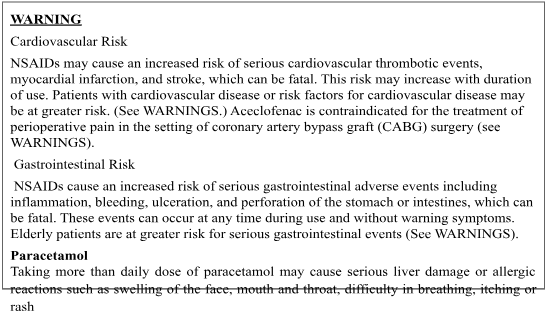
Paracetamol may cause liver damage if more than the recommended dose is taken. Allergic reactions like swelling of the face, mouth and throat, difficulty in breathing, itching or rash may occur due to high doses of paracetamol. Severe liver damage may occur if:
• Adult takes more than 4000 mg in 24 hours, which is the maximum daily amount.
• Child takes more than 5 doses in 24 hours.
• Taken with other drugs containing paracetamol.
• Adult has 3 or more alcoholic drinks every day while using this product.
Cardiovascular and Cerebrovascular Effects
- Appropriate monitoring and advice are required for patients with a history of hypertension and/or mild-to-moderate congestive heart failure as fluid retention and oedema have been reported in association with NSAID therapy.
- Clinical trial and epidemiological data suggest that the use of some NSAIDs (particularly at high doses and in long-term treatment) may be associated with a small increased risk of arterial thrombotic events (e.g., myocardial infarction or stroke). There are insufficient data to exclude such a risk for aceclofenac.
- Patients with uncontrolled hypertension, congestive heart failure, established ischemic heart disease, peripheral arterial disease, and/or cerebrovascular disease should only be treated after careful consideration. Similar consideration should be made before initiating long-term treatment of patients with risk factors for cardiovascular disease (e.g. hypertension, hyperlipidemia, diabetes mellitus, smoking).
GI Bleeding, Ulceration and Perforation
- GI bleeding, ulceration or perforation, which can be fatal, has been reported with all NSAIDs at any time during treatment, with or without warning symptoms or a previous history of serious GI events. Close medical surveillance is imperative in patients with symptoms indicative of GI disorders, with a history suggestive of GI ulceration, with ulcerative colitis or with Crohn’s disease, bleeding diathesis or hematological abnormalities.
- The risk of GI bleeding, ulceration or perforation is higher with increasing NSAID doses, in patients with a history of ulcers, particularly if complicated with haemorrhage or perforation, and in the elderly. These patients should commence treatment on the lowest dose available.
- Combination therapy with protective agents (e.g. misoprostol or proton-pump inhibitors) should be considered for these patients, and also for patients requiring concomitant low-dose aspirin, or other drugs likely to increase GI risk.
- Patients with a history of GI toxicity, particularly when elderly, should report any unusual abdominal symptoms (especially GI bleeding), particularly in the initial stages of treatment.
- Caution should be advised in patients receiving concomitant medications that could increase the risk of ulceration or bleeding, such as oral corticosteroids, anticoagulants such as warfarin, selective serotonin-reuptake inhibitors or antiplatelet agents such as aspirin. When GI bleeding or ulceration occurs, the treatment should be withdrawn. NSAIDs should be given with care to patients with a history of GI disease (ulcerative colitis, Crohn’s disease) as these conditions may be exacerbated.
SLE and Mixed Connective Tissue Disorders
In patients with systemic lupus erythematosus (SLE) and mixed connective tissue disorders, there may be an increased risk of aseptic meningitis.
Dermatological
Serious skin reactions, some of them fatal, including exfoliative dermatitis, Stevens-Johnson syndrome and toxic epidermal necrolysis, have been reported very rarely in association with the use of NSAIDs. Patients appear to be at the highest risk for these reactions early in the course of therapy, with the onset of the reaction occurring in the majority of cases within the first month of treatment. Discontinuation should be done at the first appearance of skin rash, mucosal lesions or any other sign of hypersensitivity.
Hypersensitivity Reactions
As with other NSAIDs, allergic reactions, including anaphylactic/anaphylactoid reactions, can also occur without earlier exposure to the drug.
Haematological
May cause reversibly inhibit platelet aggregation.
Aceclofenac should be avoided in patients who have developed anaemia, agranulocytosis or thrombocytopenia secondary to NSAIDs or metamizole
Impaired female fertility:
The use of Aceclofenac 100 mg Tablets may impair female fertility and is not recommended in women attempting to conceive. In women who have difficulties conceiving or who are undergoing investigation of infertility, withdrawal of Aceclofenac 100 mg Film-coated Tablets should be considered.
Long-term Treatment
- Individuals receiving long-term treatment should be regularly monitored for renal function tests, liver function tests and blood counts.
- It is to be used with caution in hepatic porphyria, coagulation disorders, history of peptic ulcers, ulcerative colitis, Crohn’s disease, cerebrovascular bleeding, pregnancy and lactation.
- Caution should be exercised in patients with mild-to-moderate impairment of cardiac, hepatic or renal function and in elderly patients who are more likely to be suffering from these conditions. Caution is also required in patients on diuretic therapy or otherwise at risk of hypovolemia.
Paracetamol
Pregnancy
- Paracetamol in therapeutic doses does not adversely affect the pregnant mother or the fetus
Lactation
- Maternal ingestion of Paracetamol in recommended analgesic doses does not present a risk to the nursing infant
Renal effects
- Paracetamol in recommended doses is not nephrotoxic
- Acute nephrotoxicity has been reported following massive overdose either as a sequela of hepatic failure or, occasionally, in the absence of hepatic failure.
- Paracetamol can be used in patients with chronic renal disease without dosage adjustment.
Use in Chronic Liver Disease
- Paracetamol can be used in patients with liver disease
Pediatric Use
Safety and effectiveness in pediatric patients have not been established.
Geriatric Use
- No adjustment in labeled dosage is necessary for older patients who require paracetamol therapy.
Carcinogenesis
Mutagenesis
- Paracetamol does not possess mutagenic potential
- Prolonged or frequent use is discouraged. Patients should be advised not to take other paracetamol-containing products concurrently.
- Multiple daily doses or in the event of overdosage may cause severe damage to the liver; in such cases, immediate medical advice should be sought even if the patient feels well because of the risk of irreversible liver damage. In young subjects treated with 60 mg/kg daily of paracetamol, the combination with another antipyretic is not justified except in the case of ineffectiveness.
- Caution is advised in the administration of paracetamol to patients with severe renal or severe hepatic impairment (Child-Pugh> 9), mild to moderate hepatic impairment (incl. Syndrome Gilbert), acute hepatitis, concomitant administration of drugs that affect the liver function, glucose -6-phosphatedehyrogenase deficiency, haemolytic anaemia, alcohol abuse, chronic dehydration and malnutrition.
- The hazards of overdose are greater in those with Non-cirrhotic alcoholic liver disease. Caution should be exercised in cases of chronic alcoholism. Alcohol must not be used during treatment period. The daily dose should not exceed 2 grams in such case. In cases of high fever, signs of a secondary infection, or persistence of the symptoms for more than three days, medical advice should be sought.
- After prolonged use (> 3 months) of analgesics intake every day or more often, headaches may occur or worsen. Headaches caused by overuse of analgesics (mean-tested headache) should not be handled by increasing the dose. In those cases, the use of analgesics should be taken after consulting a doctor. Caution is advised in asthmatic patient sensitive to acetylsalicylic acid, because light reaction bronchospasm with paracetamol (cross-reaction) has been reported.
Caution is advised if paracetamol is administered concomitantly with flucloxacillin due to increased risk of high anion gap metabolic acidosis (HAGMA), particularly in patients with severe renal impairment, sepsis, malnutrition and other sources of glutathione deficiency (e.g. chronic alcoholism), as well as those using maximum daily doses of paracetamol. Close monitoring, including measurement of urinary 5-oxoproline, is recommended.
Serratiopeptidase
- Dosage and administration should be adhered to.
- Serratiopeptidase Tablet will not interfere with the capability of driving a car or operating heavy machinery.
- Consultation with the doctor or pharmacist is needed in case of the following patients:
- Patients with a history of drug allergy
- Patients with blood coagulation abnormalities, such as epistaxis and bloody sputum, severe hepatic or renal dysfunction or under treatment with anticoagulants.
- Since the concomitant use of Serratiopeptidase Tablet with an anticoagulant may intensify the anticoagulant effect,
-
Serratiopeptidase Tablet should be administered cautiously under close observation.
The mechanism of action of Serratiopeptidase Tablet in the body is not fully clarified and a definite dose-response relationship has not been established as yet. Therefore, it should not be administered desultorily.
Not recommended for children or long term use, unless otherwise directed by your healthcare professional.
4.5 Drug Interactions
Aceclofenac
Other Analgesics, Including cox-2 Selective Inhibitors
Avoid concomitant use of two or more NSAIDs (including aspirin) as this may increase the risk of adverse effects.
Antihypertensives
Reduced antihypertensive effect.
Diuretics
Reduced diuretic effect. Diuretics can increase the risk of nephrotoxicity of NSAIDs. Although it was not shown to affect blood pressure control when co-administered with bendrofluazide, interactions with other diuretics cannot be ruled out. When concomitant administration with potassium-sparing diuretics is employed, serum potassium should be monitored.
Cardiac Glycosides
NSAIDs may exacerbate cardiac failure, reduce the glomerular filtration rate (GFR) and increase plasma glycoside levels.
Lithium
Decreased elimination of lithium.
Methotrexate
Decreased elimination of methotrexate. Caution should be exercised if NSAIDs and methotrexate are administered within 24 hours of each other, since NSAIDs may increase plasma levels, resulting in increased toxicity.
Ciclosporin
Increased risk of nephrotoxicity.
Mifepristone
NSAIDs should not be used for 8-12 days after mifepristone administration as NSAIDs can reduce the effect of mifepristone.
Corticosteroids
Increased risk of GI ulceration or bleeding.
Anticoagulants
NSAIDs may enhance the effects of anticoagulants, such as warfarin. Close monitoring of patients on combined anticoagulants and aceclofenac therapy should be undertaken.
Quinolone Antibiotics
Animal data indicate that NSAIDs can increase the risk of convulsions associated with quinolone antibiotics. Patients taking NSAIDs and quinolones may have an increased risk of developing convulsions. Antiplatelet agents and selective serotonin-reuptake inhibitors can lead to increased risk of GI bleeding.
Tacrolimus
Possible increased risk of nephrotoxicity when NSAIDs are given with tacrolimus.
Zidovudine
Increased risk of haematological toxicity when NSAIDs are given with zidovudine. There is evidence of an increased risk of haemarthroses and haematoma in HIV (+) haemophiliacs receiving concurrent treatment with zidovudine and ibuprofen.
Antidiabetic Agents
Clinical studies have shown that diclofenac can be given together with oral antidiabetic agents without influencing their clinical effect. However, there have been isolated reports of hypoglycemic and hyperglycemic effects. Thus, with aceclofenac, consideration should be given to adjustment of the dosage of hypoglycemic agents.
Other NSAIDs
Concomitant therapy with aspirin or other NSAIDs may increase the frequency of adverse reactions, including the risk of GI bleeding.
Paracetamol
- Drugs that induce hepatic microsomal enzymes, such as alcohol, barbiturates and other anticonvulsants, may increase the hepatotoxicity of paracetamol, particularly after overdosage.
- The anticoagulant effect of warfarin and other coumarins may be enhanced by prolonged regular use of paracetamol, with increased risk of bleeding.
- The effect appears to increase as the dose of paracetamol is increased, but can occur with doses as low as 1.5-2 g paracetamol per day for at least 5-7 days. Occasional doses have no significant effect.
- Probenicid inhibits the glucuronidation of paracetamol which can affect the clearance of paracetamol. This should be considered when these medicines are administered concomitantly.
- Paracetamol may affect the pharmacokinetics of chloramphenicol. This interaction should be considered when these medications are administered concomitantly, especially in malnourished patients.
- Enzyme-inducing medicines, such as some antiepileptic drugs (phenytoin, phenobarbital, carbamazepine) have been shown in pharmacokinetic studies to reduce the plasma AUC of paracetamol to approximately 60%. Other substances with enzyme-inducing properties, e.g. rifampicin and St John’s wort (Hypericum perforatum) are also suspected of causing lowered concentrations of paracetamol. In addition, the risk of liver damage during treatment with the maximum recommended doses of paracetamol will be higher in patients being treated with enzyme-inducing agents.
- The speed of absorption of paracetamol may be increased by metoclopramide or domperidone and absorption reduced by cholestyramine
Serratiopeptidase
- Serratiopeptidase may interact with medications that slow blood clotting (anticoagulant/antiplatelet drugs). Serratiopeptidase might decrease blood clotting.
- Therefore, taking serratiopeptidase along with medications that also slow clotting might increase the chances of bruising and bleeding.
- Some medications that slow blood clotting include aspirin, clopidogrel, diclofenac, ibuprofen, naproxen, dalteparin, enoxaparin, heparin, warfarin and others.
4.6 Use in special populations (Pregnancy, Nursing woman, Pediatric use, Geriatric use)
FERTILITY, PREGNANCY AND LACTATION
Aceclofenac
Congenital abnormalities have been reported in association with NSAID administration in man; however, these are low in frequency and do not appear to follow any discernible pattern. In view of the known effects of NSAIDs on the foetal cardiovascular system (risk of closure of the ductus arteriosus) and on the possible risk of persistent pulmonary hypertension of the new born, use in the last trimester of pregnancy is contraindicated.
The regular use of NSAIDs during the last trimester of pregnancy may decrease uterine tone and contraction. The onset of labour may be delayed and the duration increased with an increased bleeding tendency in both mother and child.
NSAIDs should not be used during the first two trimesters of pregnancy or labour unless the potential benefit to the patient outweighs the potential risk to the foetus. Animal studies indicate that there was no evidence of teratogenesis in rats although the systemic exposure was low and in rabbits, treatment with aceclofenac (10 mg/kg/day) resulted in a series of morphological changes in some foetuses.
In limited studies so far available, NSAIDs can appear in breast milk in very low concentrations. NSAIDs should, if possible, be avoided when breastfeeding. The use of aceclofenac should therefore be avoided in pregnancy and lactation unless the potential benefits to the other outweigh the possible risks to the foetus.
Paracetamol
Epidemiological studies in human pregnancy have shown no ill effects due to paracetamol used in the recommended dosage, but patients should follow the advice of the doctor regarding its use. Paracetamol is excreted in breast milk but not in a clinically significant amount. Available published data do not contraindicate breast feeding.
Serratiopeptidase
Pregnancy
It is not known whether Serratiopeptidase causes side effects during your pregnancy. Hence, consult your doctor if you are pregnant.
Breast-feeding
It is not known whether Serratiopeptidase passes into breastmilk. However, Serratiopeptidase is sometimes used by breastfeeding women to get relief from breast pain caused by too much milk. Hence, consult your doctor if you are breastfeeding.
Geriatric
- Use aceclofenac containing products with caution in elderly. May lead to increased frequency of adverse reactions to NSAIDs especially gastrointestinal bleeding and perforation in elderly which may be fatal..
- With paracetamol treatment , no overall differences in safety or effectiveness were observed between older patients and younger subjects, and other reported clinical experience has not identified differences in responses between the elderly and younger patients, but greater sensitivity of some older individuals cannot be ruled out.
- Serratiopeptidase can cause adverse drug reactions that may prove to be more toxic in elderly patients . Therefore, a detailed clinical picture of patients’ needs to be taken and serratiopeptidase must be used with caution in geriatrics
Pediatric
The safety and efficacy of paracetamol in children under 12 years of age has not been established. Therefore, treatment in this patient population is not recommended.
- There are no clinical data on the use of Aceclofenac in children and therefore it is not recommended for use in children under 18 years of age.
- Safety and effectiveness of serratiopeptidase in paediatric patients have not been established
4.7 Effects on ability to drive and use machines
- Paracetamol Tablets has no or negligible influence on the ability to drive and use machines.
- Undesirable effects such as dizziness, vertigo, drowsiness, fatigue, visual disturbances or other central nervous system disorders are possible after taking NSAIDs. If affected, patients should not drive or operate machinery. Based on the pharmacodynamic properties and the adverse events profile.
- Serratiopeptidase Tablet will not interfere with the capability of driving a car or operating heavy machinery.
4.8 Undesirable effects
Aceclofenac
Gastrointestinal
The most commonly-observed adverse events are gastrointestinal in nature. Peptic ulcers, perforation or GI bleeding, sometimes fatal, particularly in the elderly, may occur. Nausea, vomiting, diarrhoea, flatulence, constipation, dyspepsia, abdominal pain, melaena, haematemesis, ulcerative stomatitis, exacerbation of colitis and Crohn’s disease have been reported following administration. Less frequently, gastritis has been observed. Pancreatitis has been reported very rarely.
Hypersensitivity: Hypersensitivity reactions have been reported following treatment with NSAIDs. These may consist of (a) non-specific allergic reactions and anaphylaxis (b) respiratory tract reactivity comprising asthma, aggravated asthma, bronchospasm or dyspnoea, or (c) assorted skin disorders, including rashes of various types, pruritus, urticaria, purpura, angiodema and, more rarely exfoliative and bullous dermatoses (including epidermal necrolysis and erythema multiforme).
Cardiovascular
Oedema, hypertension and cardiac failure have been reported in association with NSAID treatment. Clinical trial and epidemiological data suggest that use of some NSAIDs (particularly at high doses and in long term treatment) may be associated with an increased risk of arterial thrombotic events (for example myocardial infarction or stroke). Vasculitis has been reported rarely.
Exceptionally, occurrence of serious cutaneous and soft tissues infections complications during varicella has been reported in association with NSAID treatment.
Renal
Nephrotoxicity in various forms, including interstitial nephritis, nephritic syndrome and renal failure.
Hepatic
abnormal liver function, hepatitis and jaundice.
Neurological and special senses: Visual disturbances, optic neuritis, headaches, paraesthesia, reports of aseptic meningitis (especially in patients with existing auto-immune disorders, such as systemic lupus erythematosus, mixed connective tissue disease), with symptoms such as stiff neck, headache, nausea, vomiting, fever or disorientation, depression, confusion, hallucinations, tinnitus, vertigo, dizziness, malaise, fatigue and drowsiness.
Haematological
Thrombocytopenia, neutropenia, agranulocytosis, aplastic anaemia and haemolytic anaemia.
Dermatological
Bullous reactions including Stevens Johnson Syndrome and Toxic Epidermal Necrolysis (very rare).
Photosensitivity
Within the system organ classes, undesirable effects are listed under headings of frequency, using the following categories: very common ( 1/10); common ( 1/100 to <1/10); uncommon ( 1/1,000 to <1/100); rare ( 1/10,000 to <1/1,000); very rare (<1/10,000), not known (cannot be estimated from the available data). Within each frequency grouping, undesirable effects are presented in order of decreasing seriousness.
| System organ class | Common(≥1/100 to <1/10) | Uncommon(≥1/1,000 to <1/100) | Rare (≥1/10,000 to <1/1,000)<1/100) |
Very rare/isolated reports(<1/10,000) |
|---|---|---|---|---|
| Blood and lymphatic system disorders | Anaemia | Bone Marrow depression Granulocytopenia Thrombocytopenia Neutropenia Haemolytic anaemia | ||
| Immune system disorders | Anaphylactic reaction (including shock) Hypersensitivity Allergic reaction | |||
| Metabolism and nutrition disorders | Hyperkalemia Hypoglycaemia | |||
| Psychiatric disorders | Depression Abnormal dreams Insomnia | |||
| Nervous system disorders | Dizziness,drowsiness | Paraesthesia Tremor Somnolence Headache Dysgeusia (abnormal taste) | ||
| Eye disorders | Visual disturbance | |||
| Ear and labyrinth disorders | Vertigo , Tinnitus | |||
| Cardiac disorders | Palpitations | |||
| Vascular disorders | Flushing Hot flush, vasculitis | |||
| Respiratory, thoracic and mediastinal disorders | Dyspnoea | Bronchospasm Stridor | ||
| Gastrointestinal disorders | Dyspepsia Abdominal pain Nausea Diarrhoea Redness of the rectal mucous membranes | Flatulence Gastritis Constipation Vomiting Mouth ulceration | Melaena | Stomatitis Haematemesis GI haemorrhage Gastric ulcer Pancreatitis, Exacerbation of Crohn’s disease and Colitis Ulcerative |
| Hepatobiliary disorders | Hepatitis Jaundice Liver damage | |||
| Skin and subcutaneous tissue disorders | Pruritus Rash Dermatitis Urticaria | Face oedema Exanthema Urticarial | Purpura Dermatitis bullous Exanthema Angioedema | Hepatitis Jaundice Liver damage |
| Musculoskeletal and connective tissue disorders | Cramps in the leg | |||
| Renal and urinary disorders | Renal insufficiency Nephrotic syndrome | |||
| General disorders and administration site conditions | Oedema Fatigue Cramps in legs |
Paracetamol
Fixed drug eruption (FDE) has been reported with Paracetamol
- Adverse effects of paracetamol are rare but hypersensitivity including skin rash may occur. There have been reports of blood dyscrasias including thrombocytopenia and agranulocytosis, but these were not necessarily causality related to paracetamol.
- Very rare cases of serious skin reactions have been reported. Cases of acute pancreatitis have been reported. Paracetamol has been widely used and reports of adverse reactions are rare, and are generally associated with overdosage. Allergic reactions occur occasionally.
- Chronic hepatic necrosis has been reported in a patient who took daily therapeutic doses of paracetamol for about a year and liver damage has been reported after daily ingestion of excessive amounts for shorter periods. A review of a group of patients with chronic active hepatitis failed to reveal differences in the abnormalities of liver function in those who were long-term users of paracetamol nor was the control of the disease improved after paracetamol withdrawal.
- Low level transaminase elevations may occur in some patients taking therapeutic doses of paracetamol; these are not accompanied with liver failure and usually resolve with continued therapy or discontinuation of paracetamol.
- Nephrotoxic effects are uncommon and have not been reported in association with therapeutic doses, except after prolonged administration.
Serratiopeptidase
-
Skin: Stevens-Johnson syndrome, Toxic epidermal necrolysis, Rash or redness, Pruritus
Hypersensitivity: Shock, Anaphylactic symptoms
Hepatic: Hepatitis, Jaundice
Gastrointestinal: Diarrhea, anorexia, gastric discomfort, nausea or vomiting
Others: Epistaxis or bloody sputum
4.9 Overdose
Aceclofenac
- Symptoms include headache, nausea, vomiting, epigastric pain, gastrointestinal irritation, gastrointestinal bleeding, rarely diarrhoea, disorientation, excitation, coma, drowsiness, dizziness, tinnitus, hypotension, respiratory depression, fainting, and occasionally convulsions. In cases of significant poisoning acute renal failure and liver damage are possible.
- Patients should be treated symptomatically as required. Within one hour of ingestion of a potentially toxic amount, activated charcoal should be considered. Alternatively, in adults, gastric lavage should be considered within one hour of ingestion of a potentially life-threatening overdose.
- Specific therapies such as, dialysis or haemoperfusion are probable of no help in eliminating NSAIDs due to their high rate of protein binding and extensive metabolism. Good urine output should be ensured. Renal and liver function should be closely monitored. Patients should be observed for at least four hours after ingestion of potentially toxic amounts. In case of frequent or prolonged convulsions, patients should be treated with intravenous diazepam. Other measures may be indicated by the patient’s clinical condition.
- Management of acute poisoning with oral aceclofenac essentially consists of supportive and symptomatic measures for complications such as hypotension, renal failure, convulsions, gastro-intestinal irritation, and respiratory depression.
- Liver damage is possible in adults who have taken 10 g or more of paracetamol. Ingestion of 5 g or more of paracetamol may lead to liver damage if the patient has risk factors.
- Risk factors:
- If the patient:
-
-is on long term treatment with carbamazepine, phenobarbitone, phenytoin, primidone, rifampicin, St John’s wort or other drugs that induce liver enzymes, or
-is likely to be glutathione depleted e.g. eating disorders, cystic fibrosis, HIV infection, starvation, cachexia. - Immediate treatment is essential in the management of overdosage. Despite a lack of significant early symptoms, patients should be referred to a hospital urgently for immediate medical attention.
- Symptoms include headache, pallor, nausea, vomiting, epigastric pain, GI irritation, GI bleeding, rarely diarrhoea, disorientation, excitation, coma, drowsiness, dizziness, tinnitus, hypotension, respiratory depression, fainting, occasionally convulsions, anorexia and abdominal pain. In cases of significant poisoning, acute renal failure and liver damage are possible. Abnormalities of glucose metabolism and metabolic acidosis may occur.
- In severe poisoning, hepatic failure may progress to encephalopathy, coma and death. Acute renal failure with acute tubular necrosis may develop even in the absence of severe liver damage. Cardiac arrhythmias and pancreatitis have been reported. Patients should be treated symptomatically as required. Within 1 hour of ingestion of a potentially toxic amount, activated charcoal should be considered. Alternatively, in adults, gastric lavage should be considered within 1 hour of ingestion of a potentially life-threatening overdose. Administration of oral methionine or intravenous N-acetylcysteine, which may have a beneficial effect up to at least 48 hours after the overdose, may be required. General supportive measures must be available.
- Specific therapies such as dialysis or haemoperfusion are probably of no help in eliminating NSAIDs due to their high rate of protein binding and extensive metabolism. Good urine output should be ensured. Renal and liver function should be closely monitored. Patients should be observed for at least 4 hours after ingestion of potentially toxic amounts. In case of frequent or prolonged convulsions, patients should be treated with intravenous diazepam. Other measures may be indicated by the patient’s clinical condition. Management of acute poisoning with NSAIDs essentially consists of supportive and symptomatic measures. Management of acute poisoning with NSAIDs essentially consists of supportive and symptomatic measures.
- Do not exceed the stated dose
Therapeutic measure:
Paracetamol
Serratiopeptidase
5.harmacological properties
5.1 Mechanism of action
Aceclofenac
Aceclofenac is a phenylacetic acid derivative nonsteroidal anti-inflammatory drug (NSAID) with marked anti-inflammatory and analgesic properties. It is a potent inhibitor of cyclooxygenase (COX),a key enzyme in the synthesis of prostaglandins and thromboxanes with selectivity for the COX-2 over COX-1 isoform.
- Aceclofenac inhibits inflammatory mediators such as reactive oxygen species and IL-1beta, IL-6 and tumour necrosis factor-alpha.
- Aceclofenac stimulates glycosaminoglycan synthesis in human osteoarthritic cartilage by inhibition of IL-1beta and suppresses cartilage degeneration by inhibiting IL-1beta-mediated promatrix metalloproteinase production and proteoglycan release.
Paracetamol
Paracetamol is a weak inhibitor of the cyclooxygenase isoforms 1 or 2 (COX-1, COX-2) but more potent on COX-3.
- Analgesic Action: The central analgesic action of paracetamol resembles that of aspirin. It produces analgesia by raising the pain threshold.
- Although the exact site and mechanism of analgesic action is not clearly defined, acetaminophen appears to produce analgesia by elevation of the pain threshold. The potential mechanism may involve inhibition of the nitric oxide pathway mediated by a variety of neurotransmitter receptors including N-methyl-D-aspartate and substance P.
- Antipyretic Effect: The antipyretic effect of paracetamol is attributed to its ability to inhibit COX in the brain where the peroxide tone is low. Recent evidence suggests inhibition of COX-3 (believed to be a splice variant product of the COX-1 gene) and could represent a primary central mechanism by which paracetamol decreases pain and, possibly, fever.
- Acetaminophen has been shown to inhibit the action of endogenous pyrogens on the heat-regulating centers in the brain by blocking the formation and release of prostaglandins in the central nervous system.
- The exact mechanism of the analgesic and antipyretic properties of acetaminophen is not established but is thought to primarily involve central actions.
- Serratiopeptidase is a zinc containing metalloprotease
- Anti inflammatory effects : Serratiopeptidase reduces inflammation in three ways: it breaks down the insoluble protein by-products of blood coagulation known as fibrin; it thins the fluids formed from inflammation and injury as well as facilitating their drainage which speeds the tissue repair process.
- Antibiofilm: The anti-biofilm ability of serratiopeptidase is attributed to ability to modulate the expression of adhesion molecules and reduces cell surface proteins of bacteria
- It prevents biofilm formation as well as helps to disperse preformed biofilm. Its anti-biofilm ability helps to enhance the penetration of antibiotics and hence increases susceptibility of biofilms to antibiotic
- Analgesic activity: The ability of serratiopeptidase to hydrolyse bradykinin, histamine, and serotonin contributes to its analgesic activity. It alleviates pain by inhibiting the release of specific pain-inducing amines called bradykinin. Serratiopeptidase digests or breaks down protein debris from toxins and inflammation.
- Wound healing: Serratiopeptidase helps liquefy secretions in inflamed areas, thus facilitates drainage. This results in reduction of swelling, pain, and enhances tissue repair.
- Fibrinolytic/caseinolytic activity: Serratiopeptidase acts by breaking down fibrin and other dead or damaged tissue without harming living tissue. This could help in the dissolution of blood clots, and atherosclerotic plaques
Serratiopeptidase
Is a zinc containing metalloprotease
5.2 Pharmacodynamic Properties
Aceclofenac
- It is a non-steroidal agent with anti-inflammatory and analgesic properties. The mode of action of aceclofenac is largely based on the inhibition to prostaglandin synthesis. Aceclofenac is a potent inhibitor of the enzyme, COX, which is involved in the production of prostaglandins. Aceclofenac relieves pain and inflammation through a variety of mechanisms and, in addition, exerts stimulatory effects on cartilage matrix synthesis.
-
It inhibits various mediators of pain and inflammation, including the following:
– PGE2 via COX inhibition (COX-1 and COX-2) after intracellular metabolism to 4-hydroxyaceclofenac and diclofenac in human rheumatoid synovial cells and other inflammatory cells.
– IL-1beta, IL-6 and tumour necrosis factor-alpha in human osteoarthritic synovial cells and human articular chondrocytes.
– Reactive oxygen species (which plays a role in joint damage) has also been observed in patients with OA of the knees.
– Expression of cell adhesion molecules (which is implicated in cell migration and inflammation) has also been shown in human neutrophils. - Stimulatory Effects on Cartilage Matrix Synthesis: Aceclofenac stimulates glycosaminoglycan synthesis in human osteoarthritic cartilage by inhibition of IL-1beta and suppresses cartilage degeneration by inhibiting IL-1beta-mediated promatrix metalloproteinase production and proteoglycan release.
- It is an aniline derivative with analgesic and antipyretic actions similar to those of aspirin, but with no demonstrable anti-inflammatory activity. Paracetamol is less irritant to the stomach than aspirin.
- It does not affect thrombocyte aggregation or bleeding time. Paracetamol is generally well tolerated by patients hypersensitive to acetylsalicylic acid. The central analgesic action of paracetamol resembles that of aspirin.
- It produces analgesia by raising the pain threshold. The antipyretic effect of paracetamol is attributed to its ability to inhibit COX in the brain where the peroxide tone is low. Recent evidence suggests inhibition of COX-3 (believed to be a splice variant product of the COX-1 gene) and could represent a primary central mechanism by which paracetamol decreases pain and, possibly, fever.
Paracetamol
Serratiopeptidase
- Binds to alpha-2-macroglobulin in the blood in the ratio of 1:1, which helps to mask its antigenicity, but retain its enzymatic activity.
- Levels of serratiopeptidase are slowly transferred to the exudate at the site of inflammation and gradually, the blood level declines. By hydrolysing bradykinin, histamine and serotonin, it indirectly reduces dilatation of blood capillaries and controls permeability. Serratiopeptidase blocks plasmin inhibitors, thus helping the fibrinolytic activity of plasmin.
- Degradation of extra-fibrin to small fragment prevents the clogging of micro capillaries, helps clearance of exudates, reduces swelling and improves microcirculation.
5.3 Pharmacokinetic properties
Aceclofenac
Absorption
After oral administration, aceclofenac is rapidly and completely absorbed as unchanged drug. Peak plasma concentrations are reached approximately 1.25-3.00 hours following ingestion.
Distribution
Aceclofenac penetrates into the synovial fluid, where the concentrations reach approximately 57% of those in plasma. The volume of distribution is approximately 25 L. Aceclofenac is highly protein-bound (>99%). Aceclofenac circulates mainly as unchanged drug.
Metabolism
4-hydroxyaceclofenac is the main metabolite detected in plasma.
Elimination
The mean plasma elimination half-life is around 4 hours. Approximately two- thirds of the administered dose is excreted via the urine, mainly as hydroxymetabolites.
Paracetamol
Absorption
Paracetamol is well absorbed by the oral route. The plasma half-life is about 2 hours.
Distribution
Plasma protein binding is negligible at the usual therapeutic concentration, but increases with increasing concentrations. Acetaminophen is, relatively, uniformly distributed throughout most body fluids. The plasma half-life is (t½) 2-3 hours and the effect after an oral dose lasts for 3-5 hours.
Metabolism
Paracetamol is primarily metabolized in the liver by conjugation to glucuronide and sulphate. A small amount (about 3-10% of a therapeutic dose) is metabolized by oxidation and the reactive intermediate metabolite thus formed is bound preferentially to the liver glutathione and excreted as cysteine and mercapturic acid conjugates.
Elimination
Excretion occurs via the kidneys. Of a therapeutic dose, 2-3% is excreted unchanged, 80-90% as glucuronide and sulphate, and a smaller amount as cysteine and mercapturic acid derivatives.
Serratiopeptidase
Absorption
After oral administration, serratiopeptidase is almost totally absorbed from the gastrointestinal (GI) tract.
Distribution
Serratiopeptidase binds to alpha-2 macroglobulin in the blood and produces an enzyme activity in the blood circulation. It shows a steep rise in concentration at the site of injury and inflammation.
Metabolism
Metabolism of serratiopeptidase takes place in the liver.
Excretion
The metabolites of serratiopeptidase are excreted through the urine and faeces.
6.Nonclinical properties
6.1 Animal Toxicology or Pharmacology
- Aceclofenac: In animals, administration of a prostaglandin synthesis inhibitor has been shown to result in increased pre- and post-implantation loss and embryo-foetal lethality. In addition, increased incidences of various malformations, including cardiovascular, have been reported in animals given a prostaglandin synthesis inhibitor during the organogenetic period. During the first and second trimester of pregnancy,
- Studies have compared the anti-inflammatory effect of serratiopeptidase with aspirin and otherproteolytic enzymes trypsin and chymotrypsin in albino rats against carrageenan induced paw edema. Serratiopeptidase showed better anti-inflammatory activity alone as well as showed a synergistic effect with aspirin in both acute and subacute modelsof inflammation in rats.
- Studies in pregnant rats that received oral acetaminophen during organogenesis at doses up to 0.85 times the maximum human daily dose (MHDD = 4 grams/day, based on a body surface area comparison) showed evidence of fetotoxicity (reduced fetal weight and length) and a dose-related increase in bone variations (reduced ossification and rudimentary rib changes). Offspring had no evidence of external, visceral, or skeletal malformations. When pregnant rats received oral acetaminophen throughout gestation at doses of 1.2 times the MHDD (based on a body surface area comparison), areas of necrosis occurred in both the liver and kidney of pregnant rats and fetuses. These effects did not occur in animals that received oral acetaminophen at doses 0.3 times the MHDD, based on a body surface area comparison.
- A dose-related reduction in body weights of fourth and fifth litter offspring of the treated mating pair occurred during lactation and post-weaning at all doses. Animals in the high dose group had a reduced number of litters per mating pair, male offspring with an increased percentage of abnormal sperm, and reduced birth weights in the next generation pups
7.Description
Orange coloured, elongated, biconvex, plain on both sides & film coated tablets
8 Pharmaceutical particulars
8.1 Incompatibilities
Not known.
8.2 Shelf Life
Refer Pack
8.3 Packaging Information
10 tablets in a blister pack.
8.4 Storage and handling instructions
Store in a dry place at a temperature not exceeding 30ºC.
Medicine: Keep out of reach of children.
9.Patient Counseling Information
- Paracetamol must be taken as per the instructions of the doctor. Avoid overuse or use for long time as paracetamol may damage the liver.
- The patients must be informed that cases of liver injury have been reported with the use of acetaminophen at doses that exceed the recommended maximum daily limit. Concomitant use of different pain medications that contain paracetamol is not advisable.
- if he/ she has had an asthma attack, hives, or other allergic reaction with aspirin or any other NSAIDs.
- right before or after heart bypass surgery.
- liver or kidney problems
- high blood pressure
-
asthma
If the patient is pregnant or plans to become pregnant, she must be advised to talk to her doctor if she is considering taking NSAIDs during pregnancy.
The patient must be advised to avoid taking NSAIDs after 29 weeks of pregnancy if she is breastfeeding or plans to breast feed.
The patient must be advised to tell the doctor about all of the medicines he/ she is taking , including prescription or over-the-counter medicines, vitamins, or herbal supplements. NSAIDs and some other medicines can interact with each other and cause serious side effects. Advise the patient to avoid taking any new medicine without talking to the doctor first.
Aceclofenac is an NSAID can causes gastrointestinal adverse effects. The patient must be advised to inform the doctor if he has had a bleeding peptic ulcer currently or in the recent past. Aceclofenac and all NSAIDs can cause changes in blood pressure in a hypertensive patient. The patient must be informed about the need to monitor BP. Since the use of NSAIDs may result in deterioration of renal function, patients with mild renal or cardiac impairment and the elderly should be receive this drug formulation under supervision.
The patient must be advised to avoid taking NSAIDs:
Before taking NSAIDs, the patient must tell his doctor about all his/ her medical conditions such as :
10.Details of manufacturer
Manufactured by:
Akums Drugs & Pharmaceuticals Ltd.
Plot No. 19, 20 & 21, Sec-6A, IIE, SIDCUL,
Ranipur, Haridwar-249403 Uttarakhand, India.
Marketed by:
Abbott Healthcare Pvt. Ltd.
Angel Space, Bldg. D-4, Gala No. 1 to 6 &
11 to 16 Ground Floor, 101 to 106 &
111 to 116 First Floor, 201 to 206 & 211 to 216
2nd Floor, Pimplas, Dist. Thane, Bhiwandi – 421 302, India.
® – Regd. Trademark of Abbott Healthcare Pvt. Ltd.
11.Details of permission or licence number with date
Mfg. License No. 5/UA/SC/P-2004 dated 03.06.2023
12.Date of revision
Version 1.0, dated 07th July 2023
For Product Complaints/Adverse events or Queries please write to webmasterindia@abbott.com


©2025 Abbott, All Rights Reserved.
Unless otherwise specified, all product and service names appearing in this Internet site are trademarks owned by or licensed to Abbott, its subsidiaries or affiliates. No use of any Abbott trademark, trade name, or trade dress in this site may be made without the prior written authorization of Abbott, except to identify the product or services of the company.