


What is in this leaflet
1. What is Valance
2. What you need to know before you take Valance
3. How to take Valance
4. Possible side effects
5. How to store Valance
6. Contents of the pack and other information
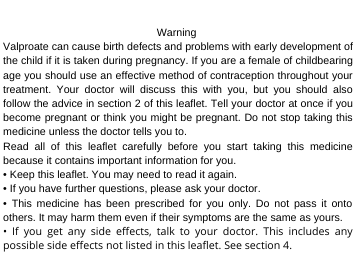
The name of your medicine is Valance Tablets (called Valproate / Valproic Acid throughout this leaflet). This belongs to a group of medicines called anti-convulsants or anti-epileptic agents. It works by controlling the activity of the brain which causes fits or seizures.
There are certain special warnings and precautions before taking valproate
Liver Problems (Hepatotoxicity)
Caution should be observed when administering Valproate / Valproic Acid products to patients with a prior history of hepatic disease.
Patients with known or suspected mitochondrial disease POLG-related disorders should be suspected in patients with a family history or suggestive symptoms of a POLG-related disorder, including but not limited to unexplained encephalopathy, refractory epilepsy (focal, myoclonic), status epilepticus at presentation, developmental delays, psychomotor regression, axonal sensorimotor neuropathy, myopathy cerebellar ataxia, opthalmoplegia, or complicated migraine with occipital aura
Pancreas related problem (Pancreatitis)
Cases of life-threatening pancreatitis have been reported in both children and adults receiving valproate. Patients and guardians should be warned that abdominal pain, nausea, vomiting, and/or anorexia could be symptoms of pancreatitis that require prompt medical evaluation. If pancreatitis is diagnosed, valproate should ordinarily be discontinued
An increase in the risk of suicidal thoughts or behavior in patients taking antiepileptic drugs (AEDs) for any indication has been reported. Patients treated with an AED for any indication should be monitored for the emergence or worsening of depression, suicidal thoughts or behavior, and/or any unusual changes in mood or behavior. Carbapenem antibiotics – see in section below
Thrombocytopenia -see in section below
Female children/Female adolescents/Women of childbearing potential/Pregnancy:
Valproate / Valproic Acid has a high teratogenic potential and children exposed in utero to Valproate / Valproic Acid have a high risk for congenital malformations and neurodevelopmental disorders.
Valproate / Valproic Acid is contraindicated in the following situations:
Treatment of epilepsy
– in pregnancy unless there is no suitable alternative treatment
– in women of childbearing potential, unless the measures for prevention of pregnancy as mentioned below are met. Treatment of mania and prophylaxis of migraine attacks – in pregnancy
Pregnancy must be excluded before start of treatment with Valproate / Valproic Acid.
Contraception
Women of childbearing potential who are prescribed Valproate / Valproic Acid must use effective contraception, without interruption during the entire duration of treatment with Valproate / Valproic Acid. These patients must be provided with comprehensive information on pregnancy prevention and should be referred for contraceptive advice if they are not using effective contraception. At least one effective method of contraception (preferably a user independent form such as an intra-uterine device or implant) or two complementary forms of contraception including a barrier method should be used. Individual circumstances should be evaluated in each case, when choosing the contraception method involving the patient in the discussion, to guarantee her engagement and compliance with the chosen measures. Even if she has amenorrhea she must follow all the advice on effective contraception.
Annual treatment reviews preferably by a specialist The treating physician should at least annually review whether Valproate / Valproic Acid is the most suitable treatment for the patient.
The treating physician should ensure the patient has understood and acknowledged the risks of congenital malformations and neurodevelopmental disorders including the magnitude of these risks for children exposed to Valproate / Valproic Acid in utero.
Pregnancy planning.
For the indication epilepsy, if a woman is planning to become pregnant, a specialist experienced in the management of epilepsy, must reassess Valproate / Valproic Acid therapy and consider alternative treatment options. Every effort should be made to switch to appropriate alternative treatment prior to conception, and before contraception is discontinued. If switching is not possible, the woman should receive further counselling regarding the Valproate / Valproic Acid risks for the unborn child to support her informed decision making regarding family planning.
In case of pregnancy
In case of pregnancy, the patient should immediately contact a specialist/ physician to re-evaluate treatment and consider alternative options.
Pharmacist must ensure that
– the patients are advised not to stop Valproate / Valproic Acid medication and to immediately contact a specialist in case of planned or suspected pregnancy.
Educational materials
In order to assist healthcare professionals and patients in avoiding exposure to Valproate / Valproic Acid during pregnancy, the Marketing Authorisation Holder has provided educational materials like a physician guide to reinforce the warnings and provide guidance regarding use of Valproate / Valproic Acid in women of childbearing potential and the details of the pregnancy prevention programme. A patient guide should be provided to all women of childbearing potential using Valproate / Valproic Acid.
Visual Reminder on outer packaging
In order to inform and remind patients about avoiding exposure to Divalproex sodium/Valproate/ Valproic Acid during pregnancy, the Marketing Authorization Holder has added a pictogram and warning to its outer packaging
Hyperammonemia
Hyperammonemia has been reported in association with Valproate / Valproic Acid therapy and may be present despite normal liver function tests
Hypothermia
Hypothermia, defined as an unintentional drop in body core temperature to <35°C (95°F), has been reported in association with Valproate / Valproic Acid therapy both in conjunction with and in the absence of hyperammonemia. This adverse reaction can also occur in patients using concomitant topiramate with valproate after starting topiramate treatment or after increasing the daily dose of topiramate
Brain Atrophy
There have been post marketing reports of reversible and irreversible cerebral and cerebellar atrophy temporally associated with the use valproate products; in some cases, patients recovered with permanent sequelae
General
Laboratory tests:
It is recommended that patients receiving Valproate / Valproic Acid be monitored for platelet count and coagulation parameters prior to planned surgery. Evidence of hemorrhage, bruising or a disorder of hemostasis/coagulation is an indication for reduction of the dosage or withdrawal of therapy.
It seems prudent not to use valproate sodium in patients with acute head trauma for the prophylaxis of post-traumatic seizures until further information is available.
Multi-Organ Hypersensitivity Reactions
Drug Reaction with Eosinophilia and Systemic Symptoms (DRESS), also known as Multi-organ hypersensitivity reactions has been rarely reported in close temporal association after the initiation of valproate therapy in adult and pediatric patients
Information for Female Patients
Patients and Since Valproate / Valproic Acid has been associated with certain types of birth defects, female patients of childbearing age considering the use of valproate / valproic acid should be advised of the risks associated with the use of Valproate / Valproic Acid during pregnancy.
Interaction with Other Medicinal Products and Other Forms of Interaction
Effects of Co-Administered Drugs on Valproate Clearance For example, phenytoin, carbamazepine, and phenobarbital (or primidone) can double the clearance of valproate. Thus, patients on monotherapy will generally have longer half-lives and higher concentrations than patients receiving polytherapy with antiepilepsy drugs.
In contrast, drugs that are inhibitors of cytochrome P450 isozymes, e.g., antidepressants, may be expected to have little effect on valproate clearance
Drugs for Which Potentially Important Interaction Has Been Observed
Aspirin - Valproate free fraction was increased four-fold in the presence of aspirin compared to valproate alone. Caution should be observed if valproate and aspirin are to be co-administered.
Carbapenem Antibiotics – A clinically significant reduction in serum valproic acid concentration has been reported in patients receiving carbapenem antibiotics (ertapenem, imipenem, meropenem) and may result in loss of seizure control.
Estrogen-Containing Hormonal Contraceptives: Estrogen-containing hormonal contraceptives may increase the clearance of valproate, which may result in decreased concentration of valproate and potentially increased seizure frequency.
Felbamate - A decrease in valproate dosage may be necessary when felbamate therapy is initiated.
Rifampin - Valproate dosage adjustment may be necessary when it is coadministered with rifampin.
Protease inhibitors- Protease inhibitors such as lopinavir, ritonavir decrease valproate plasma level when co-administered.
Cholestyramine- Cholestyramine may lead to a decrease in plasma level of valproate when coadministered
Drugs For Which Either No Interaction or a Likely Clinically Unimportant Interaction Has Been Observed
Antacids - Did not reveal any effect on the extent of absorption of valproate.
Chlorpromazine - A study revealed a 15% increase in trough plasma levels of valproate.
Haloperidol - A study revealed no significant changes in valproate trough plasma levels.
Cimetidine and Ranitidine - Cimetidine and ranitidine do not affect the clearance of valproate.
Effects of Valproate on Other Drugs
The following list provides information about the potential for an influence of valproate coadministration on the pharmacokinetics or pharmacodynamics of several commonly prescribed medications. The list is not exhaustive, since new interactions are continuously being reported.
Drugs For Which a Potentially Important Valproate Interaction Has Been Observed
Amitriptyline/Nortriptyline - Consideration should be given to lowering the dose of amitriptyline/nortriptyline in the presence of valproate.
Carbamazepine/carbamazepine-10, 11-Epoxide - Serum levels of carbamazepine (CBZ) decreased 17% while that of carbamazepine-10,11- epoxide (CBZ-E) increased by 45% upon co-administration of valproate and CBZ to epileptic patients.
Clonazepam - The concomitant use of valproic acid and clonazepam may induce absence status in patients with a history of absence type seizures.
Diazepam - Plasma clearance and volume of distribution for free diazepam were reduced by 25% and 20%, respectively, in the presence of valproate. The elimination half-life of diazepam remained unchanged upon addition of valproate.
Ethosuximide - Patients receiving valproate and ethosuximide, especially along with other anticonvulsants, should be monitored for alterations in serum concentrations of both drugs.
Lamotrigine - The dose of lamotrigine should be reduced when co-administered with valproate. Serious skin reactions (such as Stevens-Johnson syndrome and toxic epidermal necrolysis) have been reported with concomitant lamotrigine and valproate administration. See lamotrigine package insert for details on lamotrigine dosing with concomitant valproate administration.
Phenobarbital - Serum barbiturate concentrations should be obtained, if possible, and the barbiturate dosage decreased, if appropriate.
Primidone - Primidone is metabolized into a barbiturate and therefore, may also be involved in a similar interaction with valproate as phenobarbital.
Phenytoin - The dosage of phenytoin should be adjusted as required by the clinical situation.
Valproic acid serum levels may be increased in case of concomitant use with phenytoin or phenobarbital. Therefore, patients treated with those two drugs should be carefully monitored for signs and symptoms of hyperammonemia.
Propofol- A clinically significant interaction between valproate and propofol may occur leading to an increased blood level of propofol. Therefore, when co-administered with valproate, the dose of propofol should be reduced.
Nimodipine: Concomitant treatment of nimodipine with valproic acid may increase nimodipine plasma concentration by 50 %.
Tolbutamide - From in vitro experiments, the unbound fraction of tolbutamide was increased from 20% to 50% when added to plasma samples taken from patients treated with valproate. The clinical relevance of this displacement is unknown.
Topiramate and acetazolamide – Concomitant administration of valproic acid and topiramate has been associated with hyperammonemia with and without encephalopathy.
Concomitant administration of topiramate with valproic acid has also been associated with hypothermia in patients who have tolerated either drug alone. Blood ammonia levels should be measured in patients with reported onset of hypothermia
Warfarin - Coagulation tests should be monitored if valproic acid therapy is instituted in patients taking anticoagulants.
Zidovudine - In six patients who were seropositive for HIV, the clearance of zidovudine (100 mg every eight hours) was decreased by 38% after administration of valproate (250 or 500 mg every eight hours); the half-life of zidovudine was unaffected.
Quetiapine - Co-administration of valproate and quetiapine may increase the risk of neutropenia/leucopenia.
Drugs For Which Either No Interaction or a Likely Clinically Unimportant Interaction Has Been Observed
Acetaminophen - Valproate had no effect on any of the pharmacokinetic parameters of acetaminophen when it was concurrently administered to three epileptic patients.
Clozapine - In psychotic patients (n=11), no interaction was observed when valproate was coadministered with clozapine.
Lithium - No effect on the steady-state kinetics of lithium.
Lorazepam - Concomitant administration of valproate (500 mg b.i.d.) and lorazepam (1 mg b.i.d.) in normal male volunteers (n=9) was accompanied by a 17% decrease in the plasma clearance of lorazepam.
Olanzapine - Valproic acid may decrease the olanzapine plasma concentration.
Rufinamide - Valproic acid may lead to an increase in plasma level of rufinamide. This increase is dependent on concentration of valproic acid. Caution should be exercised, in particular in children, as this effect is larger in this population.
1.1. Use in special populations
Fertility, Pregnancy and Lactation:
Valproate / Valproic Acid is contraindicated as treatment for epilepsy during pregnancy unless there is no suitable alternative to treat epilepsy. Valproate / Valproic Acid is contraindicated for use in women of childbearing potential unless the measures for prevention of pregnancy are taken
Valproate was shown to cross the placental barrier both in animal species and in humans
Pregnancy Exposure Risk related to valproate Both valproate monotherapy and valproate/valproic acid polytherapy are associated with abnormal pregnancy outcomes. Available data suggest that antiepileptic polytherapy including valproate is associated with a greater risk of congenital malformations than valproate monotherapy.
Congenital malformations
Data derived from a meta-analysis (including registries and cohort studies) has shown that 10.73% of children of epileptic women exposed to valproate monotherapy during pregnancy suffer from congenital malformations (95% CI: 8.16 -13.29). This is a greater risk of major malformations than for the general population, for whom the risk is about 2-3%. The risk is dose dependent but a threshold dose below which no risk exists cannot be established.
Available data show an increased incidence of minor and major malformations. The most common types of malformations include neural tube defects, facial dysmorphism, cleft lip and palate, craniostenosis,cardiac, renal and urogenital defects, limb defects (including bilateral aplasia of the radius), and multiple anomalies involving various body systems.
In utero exposure to valproate may also result in hearing impairment/loss due to ear and/or nose malformations (secondary effect) and/or to direct toxicity on the hearing function. Cases describe both unilateral and bilateral deafness or hearing impairment. Monitoring of signs and symptoms of ototoxicity is recommended.
Developmental disorders
Data have shown that exposure to valproate in utero can have adverse effects on mental and physical development of the exposed children. The risk seems to be dose-dependent but a threshold dose below which no risk exists, cannot be established based on available data. The exact gestational period of risk for these effects is uncertain and the possibility of a risk throughout the entire pregnancy cannot be excluded.
Studies in preschool children exposed in utero to valproate show that up to 30-40% experience delays in their early development such as talking and walking later, lower intellectual abilities, poor language skills (speaking and understanding) and memory problems, possibility indicating neurodevelopmental disorders.
Intelligence quotient (IQ) measured in school aged children (age 6) with a history of valproate exposure in utero was on average 7-10 points lower than those children exposed to other antiepileptics.
Although the role of confounding factors cannot be excluded, there is evidence in children exposed to valproate that the risk of intellectual impairment may be independent from maternal IQ. There are limited data on the long term outcomes. Available data show that children exposed to valproate in utero are at increased risk of autistic spectrum disorder (approximately three-fold) and childhood autism (approximately five-fold) compared with the general study population.
Available data suggest that children exposed to valproate in utero are at increased risk of developing attention deficit/hyperactivity disorder (ADHD) (approximately 1.5-fold) compared to the general population.
Female children, female adolescents and woman of childbearing potential
• If a Woman wants to plan a Pregnancy
For epilepsy indication: During pregnancy, maternal tonic clonic seizures and status epilepticus with hypoxia may carry a particular risk of death for mother and the unborn child.
For epilepsy and/ or mania/bipolar disorder indication: In women planning to become pregnant or who are pregnant, valproate therapy should be reassessed
For epilepsy and/ or mania/bipolar disorder indication: If a woman plans a pregnancy or becomes pregnant, valproate therapy should be stopped.
For epilepsy and/ or mania/bipolar disorder indication: In women planning to become pregnant all efforts should be made to switch to appropriate alternative treatment prior to conception, if possible.
If a woman plans a pregnancy
For the indication epilepsy, if a woman is planning to become pregnant, a specialist (preferably) experienced in the management of epilepsy, must reassess Valproate / Valproic Acid therapy and consider alternative treatment options. Every effort should be made to switch to appropriate alternative treatment prior to conception, and before contraception is discontinued. If switching is not possible, the woman should receive further counselling regarding the Valproate / Valproic Acid risks for the unborn child to support her informed decision making regarding family planning.
For the indication(s) mania and prophylaxis of migraine, if a woman is planning to become pregnant, preferably a specialist experienced in the management of mania or prophylaxis of migraine must be consulted and treatment with Valproate / Valproic Acid should be discontinued and if needed switched to an alternative treatment prior to conception, and before contraception is discontinued.
Pregnant women
Valproate sodium/ Valproic Acid as treatment for mania and prophylaxis of migraine attacks is contraindicated for use during pregnancy. Valproate / Valproic Acid as treatment for epilepsy is contraindicated in pregnancy unless there is no suitable alternative treatment as evaluated and decided by the treating physician.
If a woman using Valproate / Valproic Acid/Valproate / Valproic Acid becomes pregnant, she must be immediately referred to a specialist (preferably) to consider alternative treatment options. During pregnancy, maternal tonic clonic seizures and status epilepticus with hypoxia may carry a particular risk of death for mother and the unborn child.
If, despite the known risks of Valproate / Valproic Acid/Valproate / Valproic Acid in pregnancy and after careful consideration of alternative treatment preferably by the specialist, in exceptional circumstances a pregnant woman must receive Valproate / Valproic Acid for epilepsy, it is recommended to:
• Use the lowest effective dose and divide the daily dose of Valproate / Valproic Acid into several small doses to be taken throughout the day. The use of a prolonged release formulation may be preferable to other treatment formulations in order to avoid high peak plasma concentrations.
All patients with a Valproate / Valproic Acid exposed pregnancy and their partners should consider specialized prenatal monitoring to detect the possible occurrence of neural tube defects or other malformations.
The available evidence does not suggest that folate supplementation before the pregnancy may prevent the risk of neural tube defects which may occur in all pregnancies
Risk in the neonate - Cases of hemorrhagic syndrome have been reported very rarely in neonates whose mothers have taken valproate during pregnancy. This hemorrhagic syndrome is related to thrombocytopenia, hypofibrinogenemia and/or to a decrease in other coagulation factors. Afibrinogenemia has also been reported and may be fatal. However, this syndrome must be distinguished from the decrease of the vitamin-K factors induced by phenobarbital and enzymatic inducers. Therefore, platelet count, fibrinogen plasma level, coagulation tests and coagulation factors should be investigated in neonates.
- Cases of hypoglycaemia have been reported in neonates whose mothers have taken valproate during the third trimester of their pregnancy.
- Cases of hypothyroidism have been reported in neonates whose mothers have taken valproate during pregnancy. - Withdrawal syndrome (such as, in particular, agitation, irritability, hyper-excitability, jitteriness, hyperkinesia, tonicity disorders, tremor, convulsions and feeding disorders) may occur in neonates whose mothers have taken valproate during the last trimester of their pregnancy.
Breastfeeding
Valproate / Valproic Acid is excreted in human milk with a concentration ranging from 1% to 10% of maternal serum levels. Hematological disorders have been shown in breastfed newborns/infants of treated women A decision must be made whether to discontinue breast-feeding or to discontinue/abstain from sodium valproate therapy taking into account the benefit of breast feeding for the child and the benefit of therapy for the woman.
Fertility
Amenorrhoea, polycystic ovaries and increased testosterone levels have been reported in women using valproate. Valproate administration may also impair fertility in men. Case reports indicate that fertility dysfunctions are reversible after treatment discontinuation
Paediatric Use
Experience with oral valproate has indicated that children under the age of two years are at a considerably increased risk of developing fatal hepatotoxicity.
Younger children, especially those receiving enzyme-inducing drugs, will require larger maintenance doses to attain targeted total and unbound valproic acid concentrations.
Geriatric Use
The starting dose should be reduced in these patients, and dosage reductions or discontinuation should be considered in patients with excessive somnolence.
Aggravated convulsions
As with other antiepileptic drugs, some patients may experience, instead of an improvement, a reversible worsening of convulsion frequency and severity (including status epilepticus), or the onset of new types of convulsions with valproate. In case of aggravated convulsions, the patients should be advised to consult their physician immediately. This medicinal contains lactose. Patients with rare hereditary problems of galactose intolerance, the Lapp lactase deficiency or glucose-galactose malabsorption should not take this medicine.
1.2. Effect on ability to drive and use machines
Since valproic acid may produce CNS depression, especially when combined with another CNS depressant (e.g., alcohol), patients should be advised not to engage in hazardous activities, such as driving an automobile or operating dangerous machinery, until it is known that they do not become drowsy from the drug.

Always take valproate exactly as your doctor has told you. Valproate treatment must be started and supervised by a doctor specialized in the treatment of epilepsy.
Taking this medicine
• Swallow the tablets whole with a drink of water
• Do not crush or chew
• Take with or just after a meal.
This will help reduce the chances of getting certain side effects such as nausea or upset stomach.
Administration
• Valproate tablets may be given twice daily.
People with kidney problems
If you or your child have kidney problems, your doctor may prescribe a lower dose.
Do not change the dose you have been prescribed without first discussing with your doctor
. When treatment is first started
At first you may be prescribed a lower dose. This is because some patients need less valproate than others to control their fits. Your doctor will then increase the dosage until your condition is controlled.
• Because of this it is very important that you follow your doctor’s instructions about how much to take.
• Blood tests may be needed to check how well the medicine is working.
• You may be taking other medicines for epilepsy at the same time as valproate. If so, your doctor may increase the dose of valproate by 5-10mg for each kg of body weight each day.
Appointments
Make sure you keep your regular appointments for a check-up. They are very important as your dose may need to be changed. If you go into hospital or visit another doctor or a dentist, tell them you are taking valproate
If you take more valproate than you should
An overdose of this medicine may be dangerous. If you think you may have taken more valproate tablets than you should (or someone else has taken some), talk to a doctor or go to the nearest hospital casualty department straight away. Take the carton and any valproate tablets left with you so that the doctors know what you have taken.
The following effects may happen: feeling sick or being sick, pupils of the eye become smaller, dizziness, loss of consciousness, weak muscles and poor reflexes, breathing problems, headaches, fits (seizures), confusion, memory loss and unusual or inappropriate behaviour.
If you forget to take valproate
If you forget to take a dose at the right time, take it as soon as you remember, unless it is nearly time for your next dose. Then go on as before. Do not take a double dose to make up for a forgotten dose.
If you stop taking valproate
Do not stop taking valproate without first discussing this with your doctor, even if you feel better. This is because stopping suddenly may lead to your fits coming back. If you have any further questions on the use of this product, ask your doctor.
Like all medicines, valproate can cause side effects, although not everybody gets them. Usually they are not serious, and may stop if you change to another medicine.
Stop taking sodium valproate and see a doctor or go to a hospital straight away if:
• You get swelling of the face, lips or throat which may cause difficulty in swallowing or breathing.
Hands, feet or genitals may also be affected. More severe allergic reactions can lead to lymph node enlargement and possible impairment of other organs. You could also notice an itchy, lumpy rash (hives) nettle rash (urticaria), joint pain or fever (systemic lupus erythematosus). This may mean you are having an allergic reaction to sodium valproate
Adverse Reactions
Very Common : Somnolence (Excess sleepiness), Tremor (Feeling shaky ), Nausea7 (Urge to vomit) , Asthenia(Lack of energy),
Common: Thrombocytopenia (Platelets decrease in this blood problem ), Weight decreased, Weight increased, Amnesia (Loss of Memory), Ataxia(Lack of muscle-co-ordination), Dizziness, Dysgeusia(Altered Taste),Headache, Nystagmus (rapid movement of eyes), Paresthesia (Tingling sensation), Speech disorder, Tinnitus(ringing in ears), Stomach disorders): Abdominal pain, Constipation, Diarrhoea, Dyspepsia7,Flatulence,Vomiting, Alopecia10(Hairloss) , Ecchymosis(Bruise), Pruritus(Itching) , Rash, Decreased appetite, Increased appetite, Gait disturbance, Oedema peripheral, Abnormal dreams, Affect lability, Confusional state, Depression, Insomnia, Nervousness,Thinking abnormal, Amblyopia (poor vision), Diplopia(Double vision), Infection, Injury
Uncommon : Anemia, Hypochromic anemia, Leukopenia, Thrombocytopenic purpura (Blood disorders), Alanine aminotransferase increased1, Aspartate aminotransferase increased1, Blood creatinine increased, Blood folate decreased, Blood lactate dehydrogenase increased, Blood urea increased, Drug level increased, Liver function test abnormal, Protein bound iodine increased, White blood cell count decreased, Aphasia (Language disorder) , Coordination abnormal, Dysarthria (slurred speech ), Dystonia (movement disorder), Encephalopathy2 (Brain disorder) Hyperkinesia (movement disorder) ,Hyperreflexia (movement disorder), Hypertonia (muscle tone increases), Hypoesthesia (Numbness) ,Hyporeflexia (movement disorder), Seizure3, Stupor(insensibility), Tardive Dyskinesia (movement disorder), Visual field defect, Deafness6, Ear disorder, Hyperacusis(hearing disorder), Vertigo(Feeling off balance ), Cough, Dyspnoea (Difficulty in breathing , Dysphonia (Voice disorder), Epistaxis(nose bleeding), Anal incontinence, Anorectal disorder, Breath odour, Dry mouth, Dysphagia, Eructation,Gingival bleeding, Glossitis, Hematemesis, Melena, Pancreatitis8, Rectal tenesmus, Salivary hypersecretion, Haematuria (Blood in urine ), Micturition urgency, Pollakiuria(frequent urination), Urinary incontinence, Acne, Dermatitis exfoliative, Dry skin, Eczema, Erythema nodosum, Hyperhidrosis, Nail disorder, Petechiae, Seborrhoea, Muscle spasm, Muscle twitching, Muscular weakness, Hyperkalaemia, Hypernatremia, Hypoglycaemia, Hyponatremia, Hypoproteinaemia, Haemangioma of skin, Orthostatic hypotension, Pallor, Peripheral vascular disorder, Vasodilatation, Chest pain, Chills, Face oedema, Pyrexia, Amenorrhea (No menses), Dysmenorrhea, (pain during menstruation )Erectile dysfunction, Menorrhagia (Excess Menses), Menstrual disorder, Metrorrhagia(abnormal bleeding from uterus), Vaginal haemorrhage, Agitation, Anxiety, Apathy, Catatonia, Delirium, Euphoric mood, Hallucination, Hostility, Personality disorder, Bradycardia, Cardiac arrest, Cardiac failure congestive, Tachycardia, Chromatopsia, Dry eye, Eye disorder, Eye pain, Lacrimation disorder, Miosis, Photophobia, Visual impairment, Bronchitis, Furuncle, Gastroenteritis, Herpes simplex, Influenza, Rhinitis, Sinusitis
Unknown: Porphyria acute (rare illness called porphyria which affects metabolism ) Agranulocytosis, Anemia folate deficiency, Anemia macrocytic, Aplastic anemia, Bone marrow failure, Eosinophilia, Hypofibrinogenemia, Lymphocytosis, Macrocytosis, Pancytopenia, Platelet aggregation inhibition,(Blood disorders ) Blood bilirubin increased, Carnitine decreased, Thyroid function test abnormal, (Brain disorders) : Asterixis, Cerebellar atrophy4, Cerebral Atrophy, Cognitive disorder, Coma, Extrapyramidal disorder, Disturbance in attention, Memory impairment, Parkinsonism, Psychomotor hyperactivity, Psychomotor skills impaired, Sedation5 Ear pain Pleural effusion(fluid between the tissue that line the lung ) Gingival disorder, Gingival hypertrophy, Gingival hyperplasia, (Kidney disorders):Enuresis, Fanconi syndrome9, Renal failure, Tubulointerstitial nephritis (Skin problems):Cutaneous vasculitis, Drug Rash with Eosinophilia and Systemic Symptoms syndrome (DRESS)-Delayed type of hypersensitivity reaction, Erythema multiforme (skin rash or skin lesions with a pink/red ring and a pale centre which may be itchy, scaly or filled with fluid. The rash may appear especially on the palms or soles of feet. These could be signs of a serious allergy to the medicine called ‘erythema multiforme’ ), Hair disorder, Nail bed disorder,Photosensitivity reaction, Stevens-Johnson Syndrome (Blistering or bleeding of the skin around the lips, eyes, mouth, nose and genitals. Also flu-like symptoms and fever. This may be something called ‘Stevens-Johnson syndrome’ ),Toxic epidermal necrolysis (Severe blistering rash where layers of the skin peel off to leave large areas of raw exposed skin over the body. Also a feeling of being generally unwell, fever, chills and aching muscles. This may be something called ‘Toxic epidermal necrolysis’) Bone density decreased, Bone pain, Osteopenia, Osteoporosis, Rhabdomyolysis, Systemic lupus Erythematosus(itchy, lumpy rash (hives) nettle rash (urticaria), joint pain or fever ) Hyperandrogenism11, Hypothyroidism, Inappropriate antidiuretic hormone secretion ,Biotin deficiency, Dyslipidemia, Hyperammonemia, Insulin resistance, Obesity ,Myelodysplastic syndrome, Hypothermia, Hepatotoxicity, Breast enlargement, Galactorrhea, Infertility Male12, Menstruation irregular, Polycystic ovaries, Abnormal behaviour, Aggression, Emotional distress, Learning disorder, Psychotic disorder Anaphylactic reaction, Hypersensitivity Otitis media, Pneumonia, Urinary tract infection
1 may reflect potentially serious hepatotoxicity
2 encephalopathy with or without fever has developed shortly after the introduction of valproate monotherapy without evidence of hepatic dysfunction or inappropriately high plasma valproate levels. Although recovery has been described following drug withdrawal, there have been fatalities in patients with hyperammonemic encephalopathy, particularly in patients with underlying urea cycle disorders Encephalopathy in the absence of elevated ammonia levels was also observed.
3 here, consider aggravated seizure
4 reversible and irreversible. Cerebral atrophy seen in children exposed to valproate in utero led to various forms of neurological events, including developmental delays and psychomotor impairment
5 noted in patients receiving valproate alone but occur most often in patients receiving combination therapy. Sedation usually abates upon reduction of other antiepileptic medication
6 either reversible or irreversible
7 these effects are usually transient and rarely require discontinuation of therapy
8 includes acute pancreatitis including fatalities
9 occurring primarily in children
10 reversible
11 with events of hirsutism, virilism, acne, male pattern alopecia, androgen increased
12 including azoospermia, abnormal semen analysis, decreased sperm count, spermatozoa morphology abnormal, aspermia, and decrease spermatozoa motility
• Keep out of the sight and reach of children.
• Do not take this medicine after the expiry date shown on the pack.
• Store this medicine below 30ºC and in a dry place.
• Store this medicine in the original container.
What Valance Tablets contain
Each gastro resistant tablet contains:
Divalproex Sodium IP
eq. to Valproic acid 125mg/ 250 mg / 500 mg
Colours: Sunset Yellow FCF & Titanium dioxide IP


©2025 Abbott, All Rights Reserved.
Unless otherwise specified, all product and service names appearing in this Internet site are trademarks owned by or licensed to Abbott, its subsidiaries or affiliates. No use of any Abbott trademark, trade name, or trade dress in this site may be made without the prior written authorization of Abbott, except to identify the product or services of the company.