


Brand Name : Xamdex®
Generic Name : Dexmedetomidine Injection USP 200 mcg/2.0 ml
Strength : 200 mcg/2.0 ml
Pack Size : 1 Ampoule
Each ml contains:
Dexmedetomidine Hydrochloride USP Equivalent to
Dexmedetomidine 100mcg Water for Injections q.s
DOSAGE FORM:
Injection
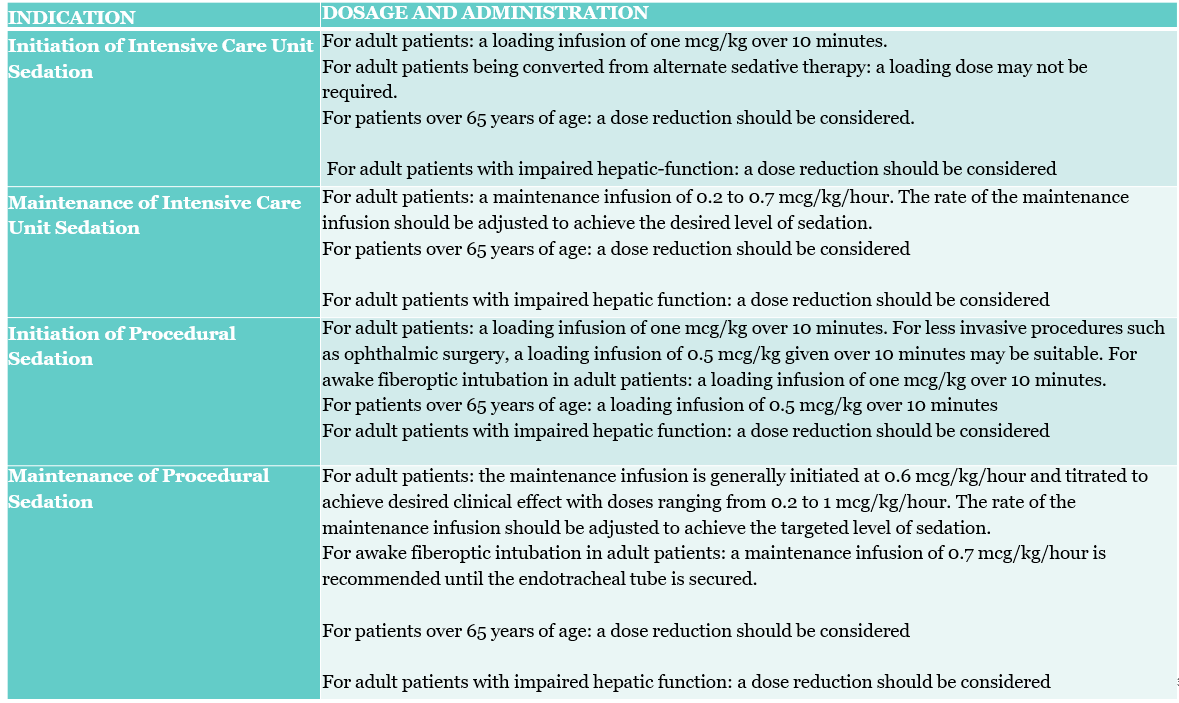
1. Indicated for sedation of initially intubated and mechanically ventilated patients during treatment in an intensive care setting
2. Indicated for sedation of non-intubated patients prior to and/or during surgical and other procedures.
Dexmedetomidine must be administered only by trained persons skilled in the management of patients in the intensive care.
Patients should be continuously monitored while receiving Dexmedetomidine.
Xamdex must be diluted with 0.9% sodium chloride injection to achieve required concentration (4 mcg/mL) prior to administration. Preparation of solutions is the same, whether for the loading dose or maintenance infusion.
Dilution for 2 ml ampoule
To prepare the infusion, withdraw 2 ml Dexmedetomidine and add to 48 ml of 0.9% sodium chloride to a total of 50 ml. Shake gently to mix well.
Dilution for 1 ml ampoule
To prepare the infusion , withdraw 1 ml Dexmedetomidine and add to 24 ml of 0.9% sodium chloride to a total of 25 ml. Shake gently to mix well. Parenteral drug products must be inspected periodically for particulate matter and discoloration prior to administration whenever solution and container permit .
Administration with other fluids
Dexmedetomidine infusion should not be co administered through the same intravenous catheter with blood or plasma since physical compatibility has not been established. Dexmedetomidine has been shown to be incompatible with amphotericin B and diazepam.
- Dexmedetomidine has been shown to be compatible when administered with the following intravenous fluids:
- 0.9% sodium chloride in water
- 5% dextrose in water
- 20% mannitol
- Lactated Ringer’s solution
- 100 mg/mL magnesium sulphate solution
- 0.3% potassium chloride solution
- Pregnancy Category C: No adequate and well-controlled studies of dexmedetomidine use in pregnant women. Fetal toxicity, as evidenced by increased post-implantation losses and reduced live pups, was observed in rats at a subcutaneous dose of 200 mcg/kg.
- Labor And Delivery: The safety of dexmedetomidine during labor and delivery has not been studied.
- Nursing Mothers: It is not known whether dexmedetomidine is excreted in human milk. Caution should be exercised when dexmedetomidine is administered to a nursing woman.
- Pediatric Use: Safety and efficacy have not been established for Procedural or ICU sedation in pediatric patients. The use of dexmedetomidine for procedural sedation in pediatric patients has not been evaluated.
- Geriatric Use
- Intensive Care Unit Sedation: A higher incidence of bradycardia and hypotension was observed following administration of dexmedetomidine Therefore a dose reduction may be considered in patients over 65 years of age.
- Procedural Sedation: Hypotension occurred in a higher incidence in dexmedetomidine -treated patients 65 years or older. A reduced loading dose of 0.5 mcg/kg given over 10 minutes is recommended and a reduction in the maintenance infusion must be considered for patients greater than 65 years of age.
- Hepatic Impairment: Since dexmedetomidine clearance decreases with increasing severity of hepatic impairment, dose reduction should be considered in patients with impaired hepatic function
Hypersensitivity to Dexmedetomidine or any other ingredients
Hypotension, Bradycardia, And Sinus Arrest
Clinically significant episodes of bradycardia and sinus arrest have been reported with Dexmetomidine administration in young, healthy adult volunteers with high vagal tone or with different routes of administration including rapid intravenous or bolus administration.
If medical intervention is required, treatment may include decreasing or stopping the infusion of Dexmetomidine, increasing the rate of intravenous fluid administration, elevation of the lower extremities, and use of pressor agents Caution must be exercised when administering Dexmetomidine to patients with advanced heart block and/or severe ventricular dysfunction. Since Dexmetomidine decreases sympathetic nervous system activity, hypotension and/or bradycardia may be more pronounced in patients with hypovolemia, diabetes mellitus, or chronic hypertension and in elderly patients. Caution should be used when vasodilators or other negative chronotropic agents are administered concomitantly with Dexmedetomidine.
Transient Hypertension
Transient hypertension may occur during the loading dose in association with the initial peripheral vasoconstrictive effects. Treatment of the transient hypertension is often not found to be necessary although reduction of the loading infusion rate may be desirable.
Arousability
Some patients receiving Dexmetomidine have been observed to be arousable and alert when stimulated.
Withdrawal
Intensive Care Unit Sedation
With administration up to 7 days, regardless of dose, 12 (5%) dexmedetomidine treated adult subjects experienced at least 1 event related to withdrawal within the first 24 hours after discontinuing study drug .The most common events were nausea, vomiting, and agitation.
Dexmedetomidine may produce a clonidine-like withdrawal syndrome upon abrupt discontinuation
Tolerance and Tachyphylaxis
Use of dexmedetomidine beyond 24 hours has been associated with tolerance and tachyphylaxis and a dose-related increase in adverse reactions
Hepatic Impairment
Since dexmedetomidine clearance decreases with severity of hepatic impairment, dose reduction should be considered in patients with impaired hepatic function
Carcinogenesis, Mutagenesis, Impairment Of Fertility
Animal carcinogenicity studies have not been performed with dexmedetomidine. Dexmedetomidine was not mutagenic in vitro, in either the bacterial reverse mutation assay (E. coli and Salmonella typhimurium) or the mammalian cell forward mutation assay (mouse lymphoma).
Fertility in male or female rats was not affected after daily subcutaneous injections of dexmedetomidine at doses up to 54 mcg/kg
A reduction in dosage of dexmedetomidine may be required when used concomitantly with anesthetic, sedative, hypnotic or opioid drugs.
Use caution during concomitant administration with drugs metabolized by CYP2D6, CYP3A4 and CYP2B6 enzymes
The most notable effects observed in two subjects who achieved the highest doses were first degree atrioventricular block and second degree heart block. No hemodynamic compromise was noted with the atrioventricular block and the heart block resolved spontaneously within one minute.
Manufacturing lic. no. G/64
Date of Revision
Version 1.0, dated 19th Nov 2020
For Product Complaints/Adverse events or Queries please write to webmasterindia@abbott.com
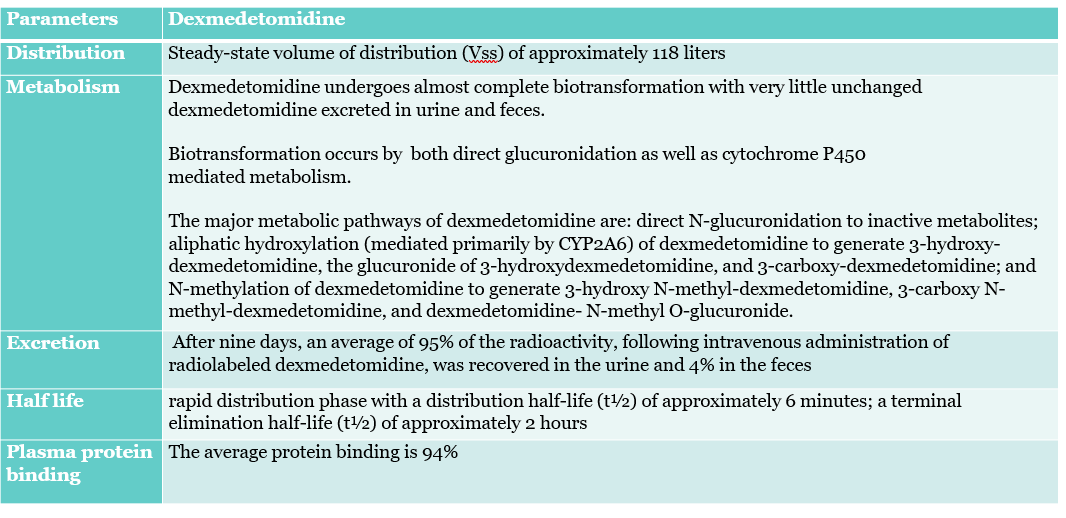
Dexmedetomidine is a relatively selective alpha2-adrenergic agonist with sedative properties. Alpha2 selectivity is observed in animals following slow intravenous infusion of low and medium doses (10-300 mcg/kg).
Both alpha1 and alpha2 activity are observed after slow intravenous infusion of high doses ( ≥ 1000 mcg/kg) or with rapid intravenous administration
Store at temperature not exceeding 25°C. Protect from light
Themis Medicare Ltd., Plot No. 16, 17 & 18, IIE, SIDCUL Haridwar, Uttarakhand- 249403, India


©2025 Abbott, All Rights Reserved.
Unless otherwise specified, all product and service names appearing in this Internet site are trademarks owned by or licensed to Abbott, its subsidiaries or affiliates. No use of any Abbott trademark, trade name, or trade dress in this site may be made without the prior written authorization of Abbott, except to identify the product or services of the company.